The return of the Spix’s macaw to its natural habitat marks one of the most significant conservation victories of the 21st century. Once declared extinct in the wild, this iconic blue parrot known worldwide as the inspiration for the animated film Rio is now taking flight again in the Brazilian savanna. This article explores the dramatic journey of the Spix’s macaw, the collaborative efforts behind its reintroduction, the remaining challenges, and what this success means for global biodiversity.
A Brief Overview of the Spix’s Macaw
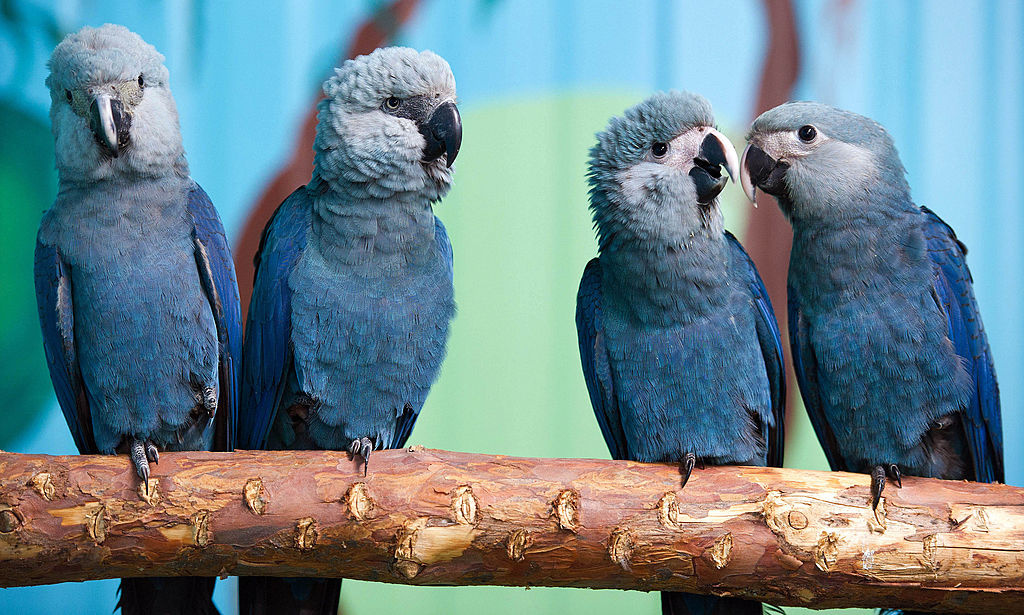
The Spix’s macaw (Cyanopsitta spixii) is a small, gentle blue parrot endemic to a specific region in northeastern Brazil called the Caatinga. Unlike larger, more aggressive macaws, the Spix’s macaw is known for its sociable nature, intelligence, and striking cobalt-blue plumage with a pale greyish head. It measures approximately 55–57 cm in length, making it medium-sized among macaws.
For centuries, these birds thrived in the gallery forests along the São Francisco River basin, relying on the Caraibeira tree (Tabebuia aurea) for nesting and the seeds of various native plants for food. However, human activities including deforestation, agriculture expansion, dam construction, and illegal trapping for the pet trade pushed the species to the brink. By 2000, the last known wild male had disappeared, and the International Union for Conservation of Nature (IUCN) declared the species extinct in the wild.
The History of Decline: How Did We Lose Them?
Understanding the return of the Spix’s macaw requires acknowledging why they vanished. Several factors converged over a 200-year period:
A. Habitat Destruction
The Caatinga is one of Brazil’s most neglected and threatened biomes. Widespread clearing of Caraibeira trees essential for nesting combined with overgrazing by goats and cattle, stripped the macaws of their breeding sites and food sources.
B. Illegal Wildlife Trade
Spix’s macaws have always been rare, but their striking beauty made them highly desirable in the exotic pet market. From the 1960s to the 1980s, trappers systematically removed both adults and chicks. Each bird could fetch tens of thousands of dollars abroad, incentivizing relentless poaching.
C. Lack of Enforcement and Awareness
For decades, Brazilian authorities lacked the resources and political will to enforce anti-poaching laws. Additionally, local communities were not educated about the macaw’s ecological role or its global significance, leading to indifference or outright hostility toward conservation efforts.
By the late 1980s, fewer than 20 individuals remained in the wild. Despite emergency measures, the last wild male was observed in 2000, and no wild population survived after 2001.
The Captive Lifeline: A Hope Against Extinction
While the wild population collapsed, a small number of Spix’s macaws survived in private and institutional collections around the world. In 1990, the Brazilian government and several international conservation organizations established the Permanent Committee for the Recovery of the Spix’s Macaw (CPRAA). The goal was to consolidate the remaining captive birds into a single, scientifically managed breeding program.
A. Locating the Survivors
At the lowest point, only about 15 to 20 Spix’s macaws were known to exist in captivity scattered across Switzerland, the Philippines, Qatar, Brazil, and the United States. Many were closely related, raising concerns about genetic diversity.
B. The Breeding Breakthrough
Through intense collaboration, the Association for the Conservation of Threatened Parrots (ACTP) in Germany and the Al Wabra Wildlife Preservation (AWWP) in Qatar developed specialized husbandry techniques. They discovered the birds’ specific dietary needs, optimal nesting conditions, and social compatibility requirements. By 2010, the captive population had reached over 100 individuals.
C. Genetic Management
Using pedigree analysis and DNA-based mate selection, conservationists carefully avoided inbreeding. Today, the global captive population exceeds 250 birds, with sufficient genetic variation to support reintroduction.
The Official Return: Spix’s Macaw Returns to Wild (2022–Present)
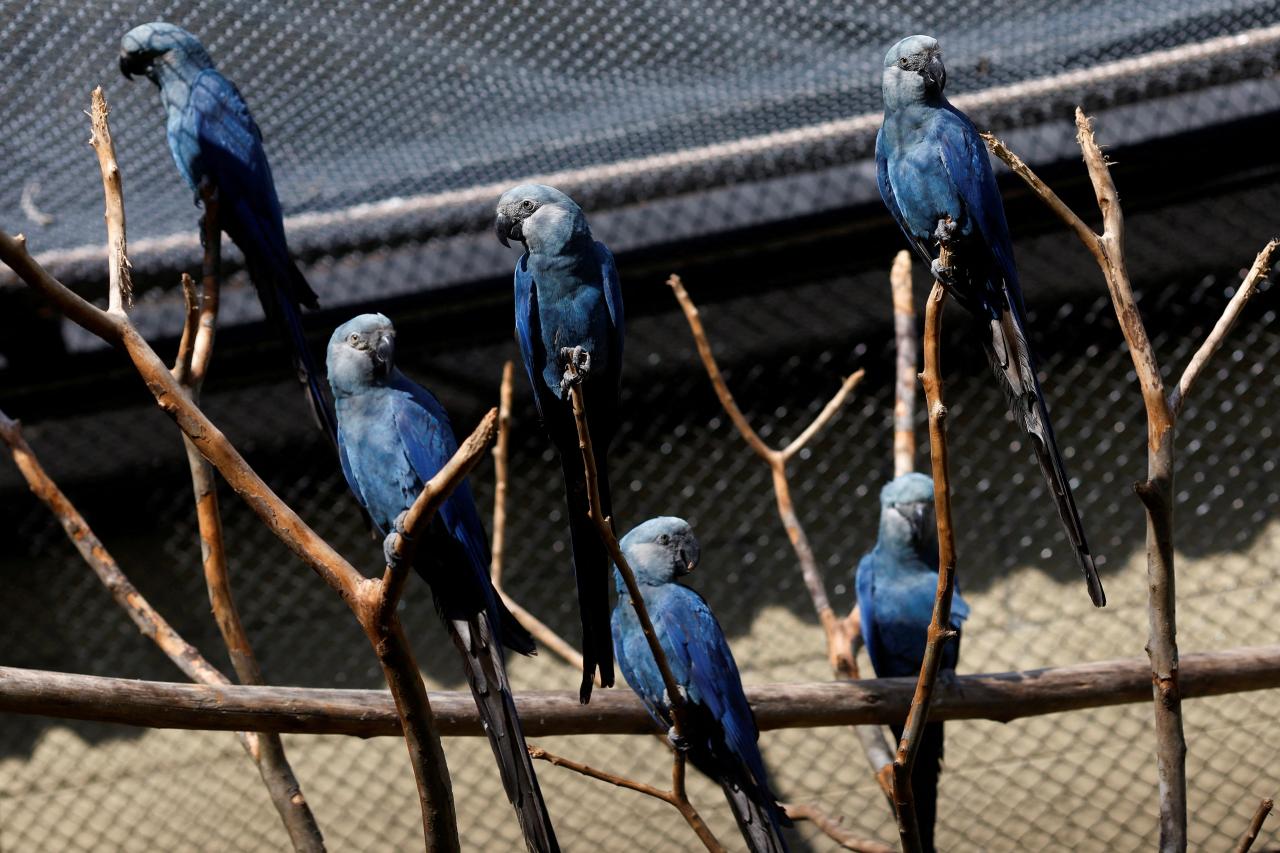
In June 2022, after decades of preparation, 52 Spix’s macaws were transported from Germany and Qatar to a reintroduction facility in Brazil’s Bahia state. This event was the culmination of a plan called the “Spix’s Macaw Release Program,” led by the Brazilian Chico Mendes Institute for Biodiversity Conservation (ICMBio) in partnership with ACTP, AWWP, and the non-profit organization Paradise Park.
A. The Release Site: Curaca Municipality
The chosen location is a 2,800-hectare protected area within the species’ historical range. The land was acquired specifically for this project, and extensive habitat restoration was undertaken. Over 100,000 native trees, including thousands of Caraibeira, were planted between 2018 and 2022.
B. Soft Release Methodology
Rather than simply opening cages, conservationists used a “soft release” process:
-
Birds were first housed in large aviaries at the release site for eight months to acclimate to local climate, food, and predators.
-
They received supplemental feeding and veterinary care while learning to identify natural food sources.
-
Predator aversion training was conducted using taxidermied models of wild cats, hawks, and snakes.
-
After adaptation, small groups were released gradually, starting in December 2022.
C. First Wild Breeding Since 2000
In November 2023, field biologists confirmed the first wild-born Spix’s macaw chick in over 20 years. The parents were both released birds. By early 2025, the reintroduced population had produced over 15 wild-fledged chicks, and the total number of Spix’s macaws living freely in the Caatinga reached approximately 60 individuals.
Why This Return Is Different from Other Reintroductions
Many reintroduction attempts fail. What makes the Spix’s macaw’s return noteworthy?
A. Community Involvement
Unlike past conservation projects that excluded locals, this program trained former goat herders and farmers as forest rangers, field monitors, and seedling nursery workers. The community now has a financial stake in the macaw’s survival eco-tourism revenue is shared, and local schools host conservation education programs.
B. Continuous Reinforcement
The project does not plan to “release and forget.” Additional captive-bred birds are being introduced annually to boost genetic diversity and population size. This “reinforcement” strategy continues until the wild population reaches 200 mature individuals.
C. Satellite Tracking and AI Monitoring
Each released bird carries a small, solar-powered GPS tracker. Data on movement, foraging, and nesting success is analyzed by artificial intelligence, allowing rapid intervention if a bird falls ill, wanders into unsafe areas, or fails to mate.
Current Status (2025–2026)
As of May 2026, the Spix’s macaw is no longer classified as “Extinct in the Wild” by the IUCN. The official status remains “Critically Endangered,” but the species is now considered “Functionally Reintroduced.” Key statistics include:
-
Total wild population: approximately 62 free-flying birds.
-
Captive population (global): 270 birds, used as a genetic reservoir.
-
Surviving wild-fledged chicks to date: 22.
-
Protected habitat area: over 5,000 hectares (expanded in 2025).
-
Annual mortality rate: 9% (within expected range for reintroductions).
Remaining Threats and Ongoing Challenges
The return of the Spix’s macaw to the wild is not a final victory. Several critical threats persist:
A. Limited Genetic Diversity
Despite careful management, all existing Spix’s macaws descend from a tiny number of founders. This makes the population vulnerable to disease outbreaks or genetic defects. Scientists are currently exploring genome editing as a last-resort future option, but for now, strict mate pairing continues.
B. Habitat Fragmentation
While the core release area is protected, surrounding lands remain degraded. Roads, small farms, and water projects still pose risks. A planned wildlife corridor to connect the Spix’s macaw habitat to other protected areas is only 20% complete.
C. Climate Change
The Caatinga is already semi-arid, and climate models predict more frequent droughts. Reduced flowering of the Caraibeira tree directly impacts food availability. Supplemental feeding will likely continue for another decade.
D. Poaching Resurgence
Although law enforcement has improved, a black market demand remains. In 2024, two released birds were stolen from a nest. The perpetrators were arrested, but the incident highlighted ongoing risks. Armed ranger patrols now operate 24/7.
What You Can Do to Help
The successful return of the Spix’s macaw depends on sustained global support. Here is how individuals and organizations can contribute:
A. Support Accredited Conservation Organizations
Donate to or volunteer with groups directly involved, such as the ACTP (Germany), ICMBio (Brazil), or the Spix’s Macaw Association.
B. Avoid Exotic Pet Ownership
Never purchase wild-caught or captive-bred Spix’s macaws or any rare parrot. Report illegal wildlife trade to local authorities.
C. Promote Sustainable Travel
If visiting Brazil, choose eco-tours that contribute to the Caatinga conservation fund. Avoid resorts or activities that exploit wildlife.
D. Raise Awareness
Share this article and reputable updates on the Spix’s macaw return. Misinformation online such as claims that the species remains extinct hurts fundraising and political will.
E. Advocate for Stronger International Laws
Encourage your government to ratify and enforce CITES (Convention on International Trade in Endangered Species) Appendix I protections, which ban commercial trade of Spix’s macaws.
Lessons for Global Conservation
The Spix’s macaw’s journey from extinct in the wild to a returning species offers valuable lessons:
A. Extinction is not inevitable – With political will, scientific collaboration, and community engagement, even the rarest species can recover.
B. Captive breeding must begin early – Waiting until wild populations collapse is dangerous. The Spix’s macaw succeeded because a few individuals were preserved before total extinction.
C. Habitat restoration is inseparable from reintroduction – Releasing birds into destroyed landscapes guarantees failure. The tree-planting efforts in Bahia were as vital as the birds themselves.
D. Long-term commitment matters – This project required over 30 years of continuous effort. Conservation is not a sprint; it is a multigenerational mission.
The Future: What Comes Next?
Looking ahead to 2030, the official goal is to downlist the Spix’s macaw to “Endangered” and establish three separate wild populations in different parts of its historical range. The second release site, located 200 kilometers south of Curaca, is currently undergoing habitat restoration and is expected to receive its first birds in 2028.
Additionally, researchers are developing an “assisted gene flow” program moving individual birds between populations to prevent inbreeding without human interference. Drones are being tested to deliver supplementary food during drought emergencies.
If all goes according to plan, by 2040, the Spix’s macaw may no longer require any human support to survive in the wild. The blue flash of its wings will once again become a natural, unremarkable sight across the Caatinga sky a living testament that humanity can reverse the damage it has caused.
Conclusion

The return of the Spix’s macaw to the wild is more than a feel-good news story. It is a scientific, political, and social achievement that redefines what people believe is possible in conservation. From just a handful of scattered captives to more than 60 birds flying free in Brazil, this blue parrot has become an ambassador for hope. However, the story is not complete. Every day, rangers, biologists, local communities, and donors continue the work of protecting each nest, each chick, each tree. The Spix’s macaw returns to wild but staying wild will require eternal vigilance. The question now is not whether the species can recover, but whether humanity has learned to protect what it saves.