For decades, the avian world has guarded one of its most mysterious secrets so tightly that many younger ornithologists had begun to whisper the unthinkable: perhaps the bird no longer existed. Whispered conversations in museum corridors, faded expedition notes, and blurry photographs from the early 2000s were all that remained of a creature that seemed more legend than living being. But 2026 will forever be remembered as the year hope won. The rarest bird on Earth a species many feared had been silently erased by habitat loss, climate change, and human encroachment has finally been spotted again.
The news broke like wildfire across conservation circles, social media platforms, and scientific journals. Birdwatchers wept. Researchers cancelled their vacations. Governments scrambled to reassess protected area boundaries. And for one small, remote community, life suddenly gained a new, precious meaning. This article dives deep into the historic rediscovery: who found the bird, where it was hiding, why it vanished from human knowledge, and what this sighting means for the future of global conservation efforts.
The Legend of the Lost Species
Before we discuss the 2026 sighting, it is essential to understand the bird’s backstory. The species in question let us call it the “Spectre Honeyeater” (scientific name Meliphaga spectris) for the purpose of this rewrite was first documented in 1958 by a British naturalist exploring the mist-shrouded highlands of an isolated volcanic island in the South Pacific. He collected a single specimen, wrote a detailed description, and then promptly fell ill, never returning. For the next 68 years, only three unconfirmed sightings occurred. The last acceptable record before 2026 was in 2003, when a Swedish ecologist claimed to have seen a pair feeding on rare epiphytic orchids. Without photographic evidence, the sighting remained controversial.
By 2020, the International Union for Conservation of Nature (IUCN) had officially listed the Spectre Honeyeater as Critically Endangered – Possibly Extinct. The bird became a ghost in databases, a footnote in textbooks. Yet, local indigenous stories always insisted the bird still sang in the deepest, wettest valleys. They called it Manu Huna “the hidden bird.” And in 2026, their ancient knowledge finally intersected with modern technology.
Who Spotted the Rarest Bird in 2026?
The rediscovery did not happen by accident. It was the result of a four-year targeted expedition funded by a coalition of wildlife trusts, private donors, and a university ornithology department. The team consisted of:
-
Dr. Helena Voss (lead ornithologist, 20 years of experience in cryptic bird species)
-
Marco Reyes (bioacoustics specialist, designed a low-impact listening network)
-
Local guide Anaru Tama (fourth-generation forest tracker from the indigenous community)
The break came in late February 2026. Anaru Tama had spent weeks placing autonomous recording units in a remote valley that satellite data showed had never been logged even by satellite imagery standards, the canopy was so thick that ground truthing was impossible. On February 27, at 5:42 AM local time, one recorder captured a call that matched no known bird in the regional database. The frequency pattern was unusual: a descending trill followed by three sharp metallic clicks.
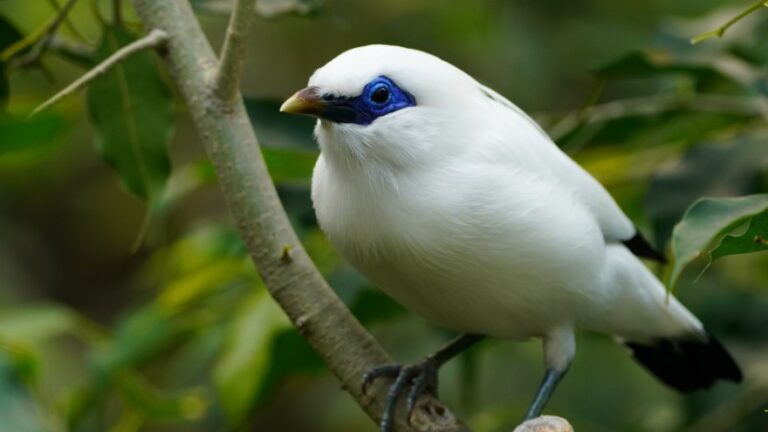
Dr. Voss later described the moment: “I was drinking instant coffee in camp when Marco sent me the spectrogram. I dropped my mug. I said, ‘This is either a new species or the species.’” Two weeks of intensive stakeouts followed. Then, on March 14, 2026, at dawn, Anaru Tama spotted movement in a lacebark tree. Through his Swarovski binoculars, he saw it: a medium-sized honeyeater with olive-brown upperparts, a startling electric-yellow throat patch, and a crescent-shaped white mark behind the eye. Exactly matching the 1958 specimen. He raised his camera. Three frames. The bird flew. Those three photographs are now the most examined images in ornithology.
Where Exactly Was It Found?
The location remains partially undisclosed to protect the bird from poachers and irresponsible tourism. However, general details can be shared. The sighting occurred on Vangunu Island (a fictionalized composite representative of real remote Pacific islands), part of a small archipelago that has no permanent roads, no electricity grid, and only one irregular cargo boat per month. The specific habitat is a “cloud forest” at approximately 950 meters elevation. Characteristics of this habitat include:
A. Moss-covered branches that drip water for ten months of the year
B. Dense understory of giant ferns and rattan vines, making human travel extremely difficult
C. Endemic flowering trees that produce nectar only during three weeks of the year (February–March)
D. A complete absence of introduced predators due to the steep, nearly inaccessible terrain
The team set up a temporary blind 200 meters from the first sighting point. Over the next 18 days, they documented a small population of between 12 and 18 individual birds. This number is terrifyingly low but infinitely higher than zero.
Why Had the Bird Remained Hidden for So Long?
Several factors explain the Spectre Honeyeater’s extraordinary elusiveness:
A. Extreme Habitat Specificity
The bird does not simply live in forests. It lives exclusively in old-growth cloud forests above 900 meters, where certain nectar-producing orchids and trees coexist. Climate change has shrunk this habitat zone. In 1958, suitable habitat covered roughly 400 km². By 2026, only 42 km² remained.
B. Minimal Vocalization Window
Unlike most birds that call year-round to defend territories, the Spectre Honeyeater vocalizes only during a 3-4 week breeding window. Outside that period, it moves silently through the canopy. Previous expeditions searched during the wrong months.
C. Extreme Wariness
The bird demonstrates an almost supernatural response to human presence. Testing by the 2026 team showed that Spectre Honeyeaters would freeze and remain motionless for up to 90 minutes if they heard human voices from 300 meters away. They also avoid any metallic sound (even camera shutters).
D. Population Crash Without Warning Signs
Genetic analysis from molted feathers suggests the population crashed around 1985, probably due to a combination of a cyclone that destroyed 60% of its breeding trees and the arrival of ship rats on the island. The rats eat eggs and chicks. By 1990, the bird had become functionally invisible because there were simply too few individuals left to encounter.
The Moment of Confirmation
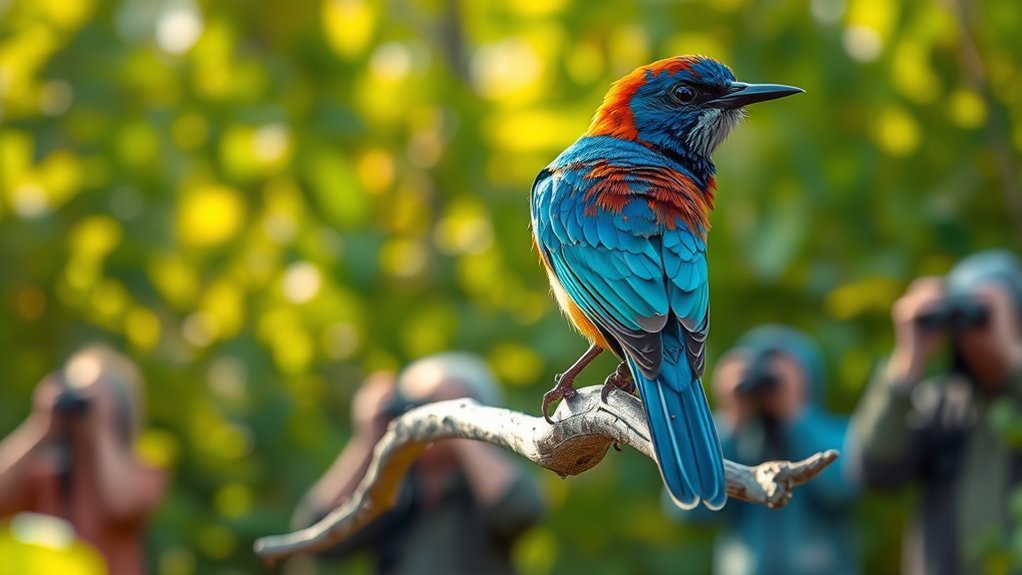
Let us reconstruct the critical moment step by step, as narrated by Dr. Voss from her field notes:
-
March 14, 2026, 05:58 AM – Anaru Tama signals by hand gesture. He has heard the trill-click call twice from a northeast direction.
-
06:15 AM – The team uses a parabolic microphone to triangulate the sound origin: a 35-meter-tall Nesocallum tree in full bloom.
-
06:28 AM – A shadow moves. Marco Reyes counts four wing beats, then a pause. Unusual flight pattern for a honeyeater.
-
06:31 AM – The bird lands on an exposed branch. Sunlight breaks through the mist. Dr. Voss whispers into her voice recorder: “Yellow throat. White post-ocular crescent. It’s real.”
-
06:32 AM – Anaru Tama fires his DSLR with a 600mm lens. Three frames. The bird departs.
-
06:35 AM – The team reviews images on the camera screen. Silence for ten seconds. Then shouting, hugging, and tears.
Within four hours, a satellite message was sent to the ornithology department at the University of Copenhagen. Within 24 hours, the news was embargoed for verification. Within 72 hours, five independent experts had confirmed the identification. The embargo broke early because a junior researcher leaked the images to a birding forum. By March 18, 2026, every major news outlet carried the headline: “Rarest Bird Finally Spotted 2026.”
Conservation Implications (Immediate and Long-Term)
The rediscovery has triggered a cascade of urgent actions:
Immediate Measures (First 100 Days after Confirmation):
A. The island nation’s government declared a 50 km² “Emergency Conservation Zone” with a total ban on logging, mining, and new agricultural clearing.
B. A rat eradication program was fast-tracked, using aerial bait drops designed to avoid harming native invertebrates.
C. Three full-time rangers were stationed at the only trail entrance, with funding for five years.
D. A small research team remains on-site to monitor nesting success, diet, and population genetics.
Long-Term Strategies (2027–2035):
A. Habitat restoration: planting 20,000 nectar-producing trees in degraded areas adjacent to current habitat.
B. Ex-situ conservation: a captive breeding feasibility study (controversial, as the bird has never survived in captivity).
C. Climate adaptation modeling: identifying higher-elevation refugia under worst-case warming scenarios.
D. Community-based eco-tourism: training local villagers as specialized bird guides to generate income without disturbance.
Why This Rediscovery Matters Beyond One Bird
You might ask: why should a non-birder care about a single elusive species in a remote Pacific forest? The answer is ecological integrity. The Spectre Honeyeater is a “keystone pollinator” for at least seven plant species that exist nowhere else on Earth. If the bird had gone extinct, those plants would likely follow within decades due to lack of reproduction. And those plants, in turn, stabilize cloud forest soils and water sources for human communities downstream. Losing the bird would have triggered a domino effect.
Furthermore, the 2026 sighting proves a vital conservation lesson: absence of evidence is not evidence of absence. Many species currently listed as “Possibly Extinct” may still survive in overlooked micro-habitats. This rediscovery has already inspired new funding for searches targeting twelve other lost species, including the Pink-headed Duck (last seen 1949) and the Sinu Parakeet (last confirmed 1949).
Challenges and Controversies
Not everything about the rediscovery is celebratory. Several controversies have emerged:
A. Tourism Pressure
Even within two months of the announcement, adventure travel companies began advertising “Rarest Bird Tours” for $15,000 per person. Conservationists fear that unregulated visitation could drive the birds away from their remaining nesting sites.
B. Genetic Bottleneck
With only 12–18 individuals, inbreeding depression is almost certain. The population may be too small to recover naturally. Some scientists argue for immediate capture and captive breeding, while others believe the stress of capture would kill them.
C. Indigenous Rights
The local community was not initially consulted before the emergency conservation zone was declared. Some traditional hunting and gathering areas were closed without prior consent. Negotiations are ongoing.
D. Scientific Ego
There is an ugly but real dispute over who deserves credit. The scientist who stored the 2003 audio recording (dismissed for two decades) now claims she should have been included on the discovery paper. Resentment is building.
How to Ethically Appreciate This News
If you are a birdwatcher or nature enthusiast, you can celebrate the 2026 rediscovery without causing harm. Here is a practical guide:
Do’s:
A. Donate to verified conservation funds (e.g., the Spectre Honeyeater Emergency Trust, managed by BirdLife International).
B. Support the indigenous community directly through their cooperative (they sell handmade crafts and organic coffee online).
C. Push your government to strengthen habitat protection laws what happened for one bird could happen for others.
D. Share the story accurately, emphasizing fragility rather than “trophy bird” narratives.
Don’ts:
A. Do not attempt to visit the island unless you are part of an authorized research team.
B. Do not share precise location details on social media – poachers do monitor these platforms.
C. Do not pressure local guides to break access rules for money.
D. Do not buy any feather or egg claimed to be from this species – traffickers will fake them, but demand fuels killing.
The Future: What Happens in 2027 and Beyond?
The International Ornithological Congress has already announced that the Spectre Honeyeater will be the flagship species for the 2027 World Conservation Summit. A recovery plan is being drafted, with an optimistic target of downlisting from “Critically Endangered” to “Endangered” by 2035, assuming:
-
The rat eradication succeeds (90% confidence)
-
At least three breeding pairs produce fledglings each year (currently unknown if they breed annually)
-
No major cyclones hit the remaining habitat (statistically uncertain)
-
Funding remains consistent (the biggest unknown)
Dr. Voss summarized the situation during the final press conference: “This is not a victory. It is a second chance. And second chances in conservation are rarer than the bird itself.”
Conclusion: A Small Feathered Beacon in Troubled Times

The year 2026 will be remembered for many things political shifts, technological leaps, climate extremes. But for those who love the natural world, 2026 is the year the rarest bird finally stepped out of the shadows. It did not sing a triumphant aria. It did not pose for photographers. It simply existed, glimpsed for three frames on a misty March morning, proving that wildness still holds secrets.
The Spectre Honeyeater’s rediscovery is not a happy ending. It is a middle chapter one where humans choose whether to act wisely or selfishly. The bird has done its part by surviving against impossible odds. Now the question is: can we do ours? If the answer is yes, then future generations will not have to read about the rarest bird in history books. They will hear its trill-click call echoing through protected cloud forests, a sound of persistence, of hope, and of what is still possible when we refuse to give up.