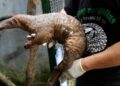
The natural world has witnessed countless species vanish, but few losses carry the tragic finality of extinction. In the annals of modern conservation, certain events serve as stark, undeniable milestones marking the end of an evolutionary lineage that has survived for millions of years. Among the most sobering of these moments is the confirmed death of the last known female Yangtze giant softshell turtle (Rafetus swinhoei). This event does not merely signify the loss of a single, aged reptile; it represents the functional extinction of a species that once thrived in the freshwater ecosystems of China and Vietnam.
For decades, conservationists, zoologists, and local communities held onto a fragile thread of hope. Artificial insemination attempts, captive breeding programs, and desperate searches for wild individuals were all part of a global effort to prevent the inevitable. Yet, despite these monumental efforts, the death of this female estimated to be over 90 years old has effectively silenced the species’ future. This article explores the tragic narrative of the Yangtze giant softshell turtle, the scientific and ethical lessons from its demise, and the broader implications for biodiversity loss in the Anthropocene.
A. A Glimpse Into a Prehistoric Life
The Yangtze giant softshell turtle is not an ordinary turtle. To understand the magnitude of this loss, one must first appreciate the creature’s unique biology and evolutionary history.
-
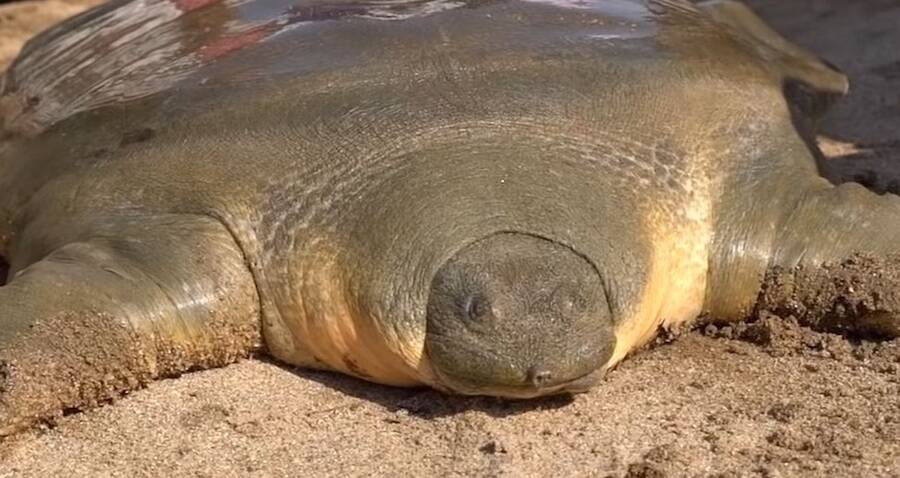
Physical Characteristics: Unlike hard-shelled turtles, this species possesses a leathery, rubber-like carapace (the top shell) that allows it to be more flexible and agile in water. Its skin is typically olive-green to grey, and its head is massive, equipped with a pig-like snout and powerful, fleshy lips. Large individuals can exceed 100 centimeters (39 inches) in length and weigh over 150 kilograms (330 pounds), making it one of the largest freshwater turtles ever known.
-
Adaptations for Survival: The turtle’s elongated, snorkel-like nose is a remarkable adaptation. It allows the animal to breathe while completely submerged, with only the tip of its snout breaking the water’s surface. This trait is especially useful in murky, low-oxygen waters where stealth is necessary for hunting fish, snails, crabs, and aquatic plants.
-
Longevity and Reproduction: These turtles are believed to have naturally long lifespans, potentially exceeding 100 years in the wild. However, their reproductive cycle is slow. Females take nearly 20 years to reach sexual maturity, and they lay only a small clutch of eggs per breeding season typically 20 to 40 eggs. In an undisturbed environment, this slow reproduction is sustainable. But under human pressure, it becomes a death sentence.
B. The Historical Range and Cultural Significance
The species once had a broad distribution across China’s Yangtze River basin, as well as in the Red River of northern Vietnam. Its presence was not merely biological but deeply cultural.
-
In China: The turtle (or “softshell turtle”) has been part of local folklore for centuries. It symbolizes longevity, wisdom, and endurance. Ancient depictions in temples and literature often reference a great turtle that supports the world. However, as China industrialized, reverence gave way to exploitation. The turtle’s meat and bones were highly prized in traditional medicine and cuisine, leading to relentless hunting.
-
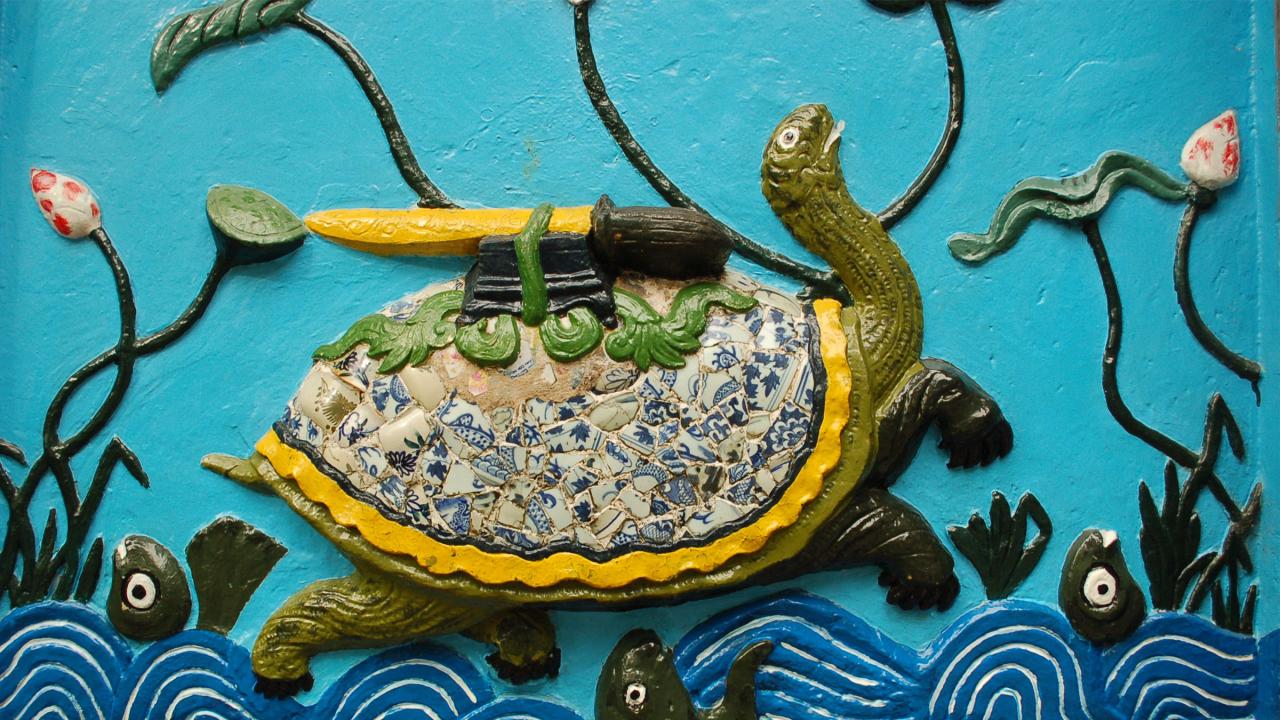
In Vietnam: The Rafetus swinhoei holds legendary status, particularly the individual known as “Cụ Rùa” (Great-Grandfather Turtle) from Hoan Kiem Lake in Hanoi. Legend states that the 15th-century Emperor Le Loi returned a magical sword to a golden turtle god in the lake, symbolizing peace and independence. For centuries, sightings of a giant softshell turtle in Hoan Kiem Lake were considered auspicious. Though the last known individual in that lake died in 2016, its preserved body is now an object of national veneration.
C. The Final Known Individuals: A Timeline of Desperation
To truly grasp the tragedy of the last female’s death, we must understand the recent history of the species’ captivity and wild populations. By the early 21st century, only four individuals were known to exist globally.
-
Suzhou Zoo, China (The Last Male and Female): The most famous pair resided at the Suzhou Zoo in Jiangsu province. The male, estimated to be over 100 years old, was caught in the wild in the 1950s. The female, the subject of this article, was originally from Changsha Zoo and brought to Suzhou in 2008 in a desperate attempt to breed them. For years, they lived together but failed to produce viable offspring due to the male’s age and potential infertility or injury (his shell was damaged during prior captures).
-
Dong Mo Lake, Vietnam (Unknown Gender): In recent years, conservationists confirmed the existence of one wild individual in Dong Mo Lake, just west of Hanoi. DNA tests from water samples and visual confirmations revealed a giant turtle, but its gender remained unclear for a long time. Later analysis suggested it was likely a male. A second individual was also identified in nearby Xuan Khanh Lake, but small size and behavior indicated a possible male or a younger, non-reproductive female.
-
The Western Zoo (Former Individuals): Another captive turtle at the Hanoi Zoo (also from Hoan Kiem Lake) died in 2016. With each death, the numbers dwindled, placing unbearable pressure on the Suzhou pair.
D. The Last Female’s Life and Death
The female that died at Suzhou Zoo was already a living fossil by the time she arrived in 2008. She had survived decades of pollution, habitat loss, and human encroachment. For 11 years, zookeepers and international scientists tried everything to encourage reproduction.
-
The Artificial Insemination Attempts: Between 2017 and 2019, a team of experts from the Turtle Survival Alliance (TSA) and the Wildlife Conservation Society (WCS) performed multiple artificial insemination procedures. The male’s sperm was collected and carefully implanted into the female. Initially, there was hope. Ultrasound scans in early 2019 showed that the female had produced a clutch of eggs—over 100 eggs. Tragically, none were fertile. The male’s sperm quality had degraded with age, and the female’s reproductive system was likely also compromised.
-
The Final Blow: On April 12, 2019, the female died following an anesthesia procedure. The zoo had performed a post-insemination health check to assess her recovery. While she successfully woke from the initial sedation, she suddenly stopped breathing a few hours later. A necropsy (animal autopsy) revealed severe, acute ovarian failure and advanced tissue degradation. Despite the zoo’s transparent reporting, many conservationists criticized the decision to anesthetize an animal over 90 years old, arguing that the risk of death was too high.
-
The Aftermath: The necropsy also recovered preserved ovarian tissue and eggs, which scientists flash-froze in liquid nitrogen. This tissue holds the only remaining hope for Rafetus swinhoei if future genetic technology (such as cloning or interspecific surrogacy) matures. However, as of today, no viable method exists to resurrect a species using only female genetic material.
E. Why Did the Yangtze Giant Softshell Turtle Go Extinct?
The extinction was not caused by a single factor but by a perfect storm of anthropogenic pressures. The primary drivers include:
-
Overhunting and Consumption: For decades, softshell turtles were considered a delicacy and a source of traditional medicine. The Yangtze giant softshell, due to its size, provided an enormous amount of meat, making it a prized target for fishermen. Hunters used traps, spears, and even electrofishing to capture them. Once removed from an environment, these slow-reproducing animals could not replenish their numbers.
-
Habitat Destruction: The Yangtze River is one of the most intensively developed waterways on Earth. Dam construction (such as the Three Gorges Dam), dredging, sand mining, and riverbank urbanization destroyed nesting beaches and foraging grounds. Female turtles require sandy banks to lay eggs; by the 1990s, almost every natural sandbar in the Yangtze basin had been removed or industrialized.
-
Pollution: Agricultural runoff, industrial chemicals, and untreated sewage decimated the water quality. Turtles are long-lived, apex scavengers, meaning they bioaccumulate toxins. High levels of heavy metals and pesticides found in tissue samples from deceased individuals likely contributed to reproductive failure and weakened immune systems.
-
Bycatch and Boat Strikes: The Yangtze is crowded with cargo ships, ferries, and fishing boats. Large turtles often need to surface to breathe. Propeller strikes, entanglement in fishing nets, and collisions with hulls killed many adults before they could reproduce.
F. The Conservation Lessons (A Checklist of Failure and Hope)
The story of the last female Yangtze turtle is a case study in both conservation failure and last-ditch innovation. From her death, we can extract a structured list of lessons:
A. Act Before the Population Crashes: Conservation intervention for Rafetus swinhoei began only when fewer than 10 individuals were known to exist. For large, long-lived species, this is far too late. Proactive monitoring during the 1980s could have allowed for captive breeding before genetics dwindled.
B. Artificial Insemination is Not a Magic Bullet: While AI works for mammals (e.g., giant pandas), it is notoriously difficult for reptiles. Their reproductive physiology is tied to complex environmental cues (temperature, humidity, light cycles). The Suzhou attempts failed partly because the captive environment could not perfectly mimic wild conditions.
C. Risk Management in Senior Animals: Performing invasive medical procedures on very old, critically endangered animals must be weighed against the potential gain. In this case, the death of the female during a routine check eliminated the entire breeding possibility of the pair. Future protocols should prioritize non-invasive monitoring for aged individuals.
D. Habitat Preservation is Primary: No amount of captive breeding can succeed if wild habitat disappears. The few wild turtles in Vietnam survive in degraded lakes surrounded by agriculture. If those lakes had been legally protected as nature reserves 20 years ago, the species might have had a chance to recover naturally.
E. Cryopreservation as a Last Resort: The frozen ovarian tissue is valuable, but it is not a solution today. Governments and NGOs must invest in “Lazarus projects” de-extinction technologies while also being realistic that these technologies may take 50 years to perfect. Funding for genetic repositories should be separate from funding for living conservation.
G. The Broader Context: The Sixth Mass Extinction
The death of the last female Yangtze giant softshell turtle is not an isolated tragedy. It is a microcosm of the global biodiversity crisis. Scientists have declared that Earth is entering its sixth mass extinction event, driven almost entirely by human activity. Freshwater ecosystems are particularly vulnerable.
-
Freshwater Species Decline: According to the WWF’s Living Planet Report, freshwater species populations have declined by an average of 84% since 1970 faster than marine or terrestrial species. Rivers and lakes cover only 1% of the Earth’s surface but host over 10% of all known species, including one-third of all vertebrates.
-
Other Recent Extinctions: The Yangtze turtle joins a grim list of recently functionally extinct or extinct freshwater giants, including the Chinese paddlefish (Psephurus gladius; declared extinct 2022), the Yangtze River dolphin (Baiji; functionally extinct 2006), and the various giant catfish species of Southeast Asia.
-
The Ripple Effect: When a large predator or scavenger like the Yangtze turtle disappears, entire food webs destabilize. These turtles ate dead fish and weak prey, cleaning the water and preventing disease outbreaks. Their extinction will allow populations of smaller, less desirable species (like invasive snails) to explode.
H. What Remains? The Future of Rafetus swinhoei
As of the date of this article, only two known individuals of Rafetus swinhoei are confirmed alive both are males. One lives in Suzhou Zoo (the same male that failed to breed). The other lives in Dong Mo Lake, Vietnam, with a possible third individual in Xuan Khanh Lake that requires further genetic confirmation. Neither lake has a confirmed, reproductively active female.
-
The Search Continues: Conservationists have not entirely given up. The TSA and Vietnam’s Institute of Ecology are conducting extensive environmental DNA (eDNA) sampling in remote wetlands along the Red River. There is a faint, statistically unlikely chance that a wild female survived in an unexplored oxbow lake or hidden creek.
-
Technological Resurrection: The frozen tissue from the Suzhou female, combined with tissue samples from other deceased males, could theoretically be used to create a hybrid embryo using a surrogate species (maybe the closely related Euphrates softshell turtle, Rafetus euphraticus). This is science fiction for now, but work on similar “rescue cloning” is underway for the northern white rhino.
-
A Symbolic Legacy: Even if no living turtle ever hatches again, the story of the Yangtze giant softshell turtle will endure as a cautionary tale. In Vietnam, the Hoan Kiem turtle remains a cultural hero. In China, the species has become an icon for river conservation activism. Some artists have created memorials using the female’s shell (preserved at Suzhou Zoo) to educate children about extinction.
I. What You Can Do: Preventing the Next Extinction
While we cannot save the last female Yangtze turtle, we can learn from her death to protect other critically endangered reptiles and freshwater species. The following actions are tangible contributions:
A. Support Ethical Conservation Organizations: Donate to or volunteer with groups that practice evidence-based conservation, such as the Turtle Survival Alliance, Wildlife Conservation Society, or local herpetological societies. Avoid organizations that fund captive breeding without habitat protection.
B. Reduce Your Ecological Footprint in Watersheds: Everything you pour down a drain or apply to your lawn eventually reaches a river. Use phosphate-free detergents, avoid microplastic cosmetics, and properly dispose of medications (never flush them).
C. Advocate for Dam Rethink: Write to your local representatives about the importance of fish ladders, seasonal flow releases, and habitat restoration for dam-affected rivers. Support policies that remove outdated, small dams that fragment habitats.
D. Say No to Illegal Wildlife Products: In many parts of Asia, softshell turtle meat is still sold illegally. Report wildlife trafficking to local authorities. Do not purchase turtle shells, oils, or “medicinal” turtle parts.
E. Spread Awareness, Not Despair: Share the story of the Yangtze turtle accurately. Many people believe extinction is inevitable or only affects “ugly” animals. One of the most beautiful, culturally significant freshwater turtles is now gone. That should move people to act for the others like the critically endangered Burmese roofed turtle or the Cantor’s giant softshell turtle.
Conclusion: A Silent River
The death of the last female Yangtze giant softshell turtle is more than a zoological record. It is the sound of extinction happening in real time a sound often silent, unnoticed, and unmourned by the majority of humanity. For those who spent decades trying to save her, her passing is a personal grief. For the two remaining males in captivity and the wild, her death is a sentence of solitary confinement without possibility of parole.
We will never again see a female Rafetus swinhoei haul herself onto a sandbar to lay a clutch of eggs under the moonlight. We will never again see a hatchling the size of a silver dollar scramble toward the safety of murky water. That future is closed. However, the end of this species is not the end of the story. It is a challenge written in the fossil record of today a challenge that asks whether we have learned enough, cared enough, and acted quickly enough to save the next species on the brink.
The Yangtze River still flows. But it flows a little emptier. And it is our collective responsibility to ensure that no other creature suffers the same fate as the last female turtle. Her name was never recorded. Her life was a monument to resilience. And her death is the final, irrefutable evidence that inaction has a price a price that, once paid, can never be refunded.