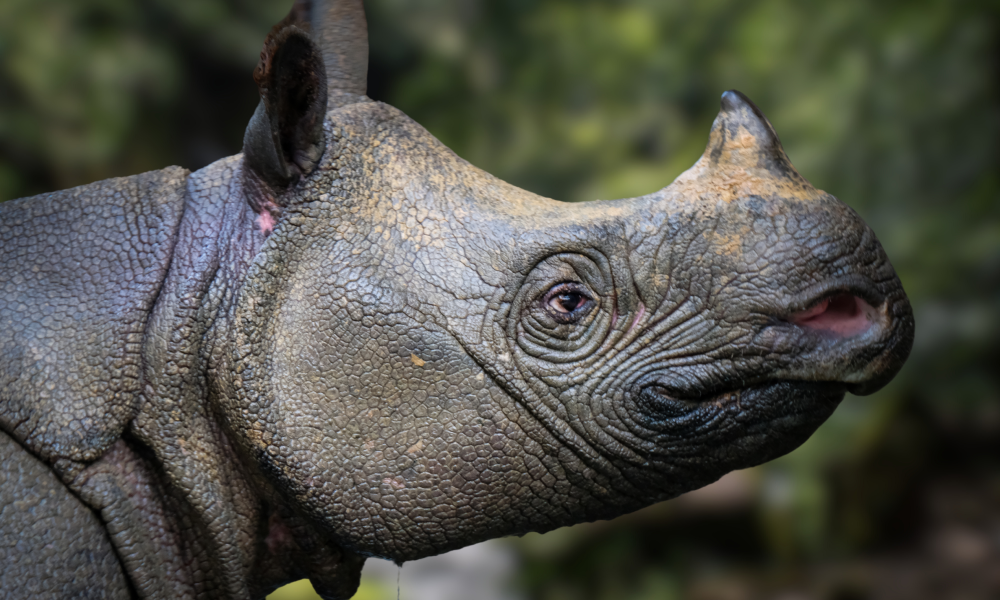
In a moment that has sent waves of excitement through the global conservation community, a hidden camera deep inside an Indonesian jungle has achieved what many thought impossible. The lens captured the miraculous birth of a Javan rhinoceros calf, one of the rarest and most endangered large mammals on Earth. This event, which took place in the dense lowland rainforests of Ujung Kulon National Park at the western tip of Java Island, offers an unprecedented glimpse into the secretive lives of these prehistoric creatures. The footage, released by the Indonesian Ministry of Environment and Forestry in collaboration with international wildlife groups, has been hailed as a groundbreaking achievement in wildlife documentation. Not only does it provide irrefutable proof of successful breeding in the wild, but it also serves as a powerful symbol of hope for a species teetering on the edge of extinction. With fewer than 80 adult Javan rhinos remaining in the world, every single birth represents a critical lifeline. This article will explore the significance of this event, the technology that made it possible, the biological and behavioral details of the birth, and the broader implications for conservation strategies moving forward.
The Significance of a Single Birth
To understand why this camera footage is so revolutionary, one must first comprehend the dire situation facing the Javan rhinoceros (Rhinoceros sondaicus). Unlike their African counterparts the white and black rhinos, whose populations have rebounded through intensive management Javan rhinos have never thrived in captivity. No zoo on Earth has successfully bred a Javan rhino in over a century. The last Javan rhino in a zoological setting died in 1907 at the Adelaide Zoo in Australia. Consequently, the entire global population exists solely in one single location: Ujung Kulon National Park. This concentration makes them exceptionally vulnerable to natural disasters, disease outbreaks, and genetic bottlenecks.
A. Population Numbers: As of the latest 2024 census, wildlife rangers and camera trap analysis estimate the population at roughly 76 to 82 individuals. This number includes a small handful of elderly rhinos that may no longer be reproductively active.
B. Reproductive Challenges: Female Javan rhinos reach sexual maturity between five and seven years of age, but pregnancies last approximately 15 to 16 months. They typically give birth to a single calf every three to five years. This slow reproductive rate means that even under ideal conditions, the population can increase by only a tiny fraction annually.
C. The Birth Deficit: For nearly a decade, conservationists worried that the sex ratio was skewed too heavily toward males, reducing the number of breeding females. Each new female calf is worth more than gold in conservation terms. The birth captured on camera was later confirmed to be a female, which instantly elevated the species’ future prospects.
The birth does not merely represent one additional rhino. It represents a proof of concept that the Ujung Kulon ecosystem remains viable for reproduction. It validates decades of habitat protection, anti-poaching patrols, and invasive species removal (particularly the eradication of the invasive palm Arenga pinnata, which chokes out rhino food plants). Without this continuous management, the rhinos would not feel safe or healthy enough to breed. Thus, the camera trap image of a wobbly newborn standing beside its mother is a visual receipt for years of unpaid conservation labor.
The Technology Behind the Miracle
The footage did not happen by accident. It is the result of a sophisticated network of motion-activated cameras, acoustic sensors, and artificial intelligence-assisted image analysis. The camera that captured the birth is part of a larger grid established in 2018 under the “Javan Rhino Study and Conservation Area” (JRSCA). These devices are designed to withstand tropical humidity, monsoon rains, and curious wildlife that might attempt to destroy them.
The specific camera model used is a high-definition infrared trap with a near-instantaneous trigger speed of less than 0.3 seconds. It runs on lithium batteries that can last up to six months in the field. Because Javan rhinos are crepuscular and nocturnal meaning they are most active during dawn, dusk, and throughout the night the camera relies heavily on black-flash infrared technology. Unlike traditional white flash, which would startle the animals and potentially cause mothers to abandon their calves, black-flash emits an invisible spectrum of light. The rhinos remain unaware they are being photographed.
Key technological features of the system include:
A. Thermal Imaging Backup: Secondary sensors record heat signatures. This allowed researchers to detect elevated body temperatures consistent with active labor, prompting them to prioritize reviewing footage from specific cameras.
B. Real-Time Data Transmission: While the camera itself stores video locally, a limited-bandwidth satellite relay transmits low-resolution thumbnails to a field station every 24 hours. Rangers spotted a blob suggesting a very small rhino and immediately hiked for two days to retrieve the full memory card.
C. Acoustic Monitoring: In addition to cameras, the park is dotted with autonomous recording units (ARUs) that capture rhino vocalizations. Javan rhinos are normally silent except during courtship and birth. The ARUs recorded low-frequency rumbles and high-pitched squeaks from the newborn, which helped pinpoint the exact location and time.
The resulting video clip is short only 47 seconds but it is exquisitely detailed. It shows the mother licking the amniotic sac off the calf, the calf attempting to stand on splayed legs, and the mother nudging it toward a mud wallow. No human was present. The entire event was witnessed only by the lens of the camera, the dripping leaves of the rainforest, and the distant call of hornbills.
Detailed Analysis of the Birth Footage
On the surface, the footage appears simple. A large female Javan rhino lies on her side in a shallow depression she has scraped into the earth. Her sides heave with exertion. Then, in a rush of fluid, a small, wrinkled creature emerges, front feet first followed by the snout and shoulders. Within two minutes, the mother stands, turns, and begins tearing at the membranous placenta with her prehensile upper lip a characteristic feature that distinguishes Javan rhinos from other species. She consumes part of the placenta, a natural behavior that replenishes nutrients and removes scent that might attract predators.
What follows is a sequence of heartwarming and scientifically valuable behaviors:
A. First Breath: Within seconds of emerging, the calf lifts its head and takes its first breath. Unlike human babies who cry immediately, rhino calves are born with mature lungs and a strong instinct to remain quiet to avoid attracting tigers though no wild tigers remain in Java, the instinct persists.
B. Attempts to Stand: The timeline of standing is critical for assessing calf health. A healthy rhino calf should stand within 30 to 60 minutes. The camera shows the calf attempting to rise after only twelve minutes. It fails and collapses sideways. A second attempt at sixteen minutes is more successful: the calf gets its front legs straight, then pushes its rear up, wobbles for three full seconds, and collapses again. Finally, at twenty-two minutes, it stands steadily and takes two stumbling steps toward its mother’s udder.
C. Nursing: The first nursing session begins at twenty-six minutes. The mother stands still and arches her back slightly to lower her teats toward the calf. The calf’s tail lifts and curls in a relaxed posture, indicating successful latch and milk flow. Javan rhino milk is extraordinarily rich in fat up to 15% compared to 3.5% in cow’s milk allowing the calf to gain weight rapidly.
D. Mud Application: Within an hour, the mother leads the calf to a pre-existing mud wallow. She uses her snout to spray mud onto the calf’s back. This serves multiple purposes: cooling, sun protection, and insect repellent. The calf instinctively rolls in the mud, a behavior that is partly learned and partly innate.
Why This Birth Is Different from Previous Sightings
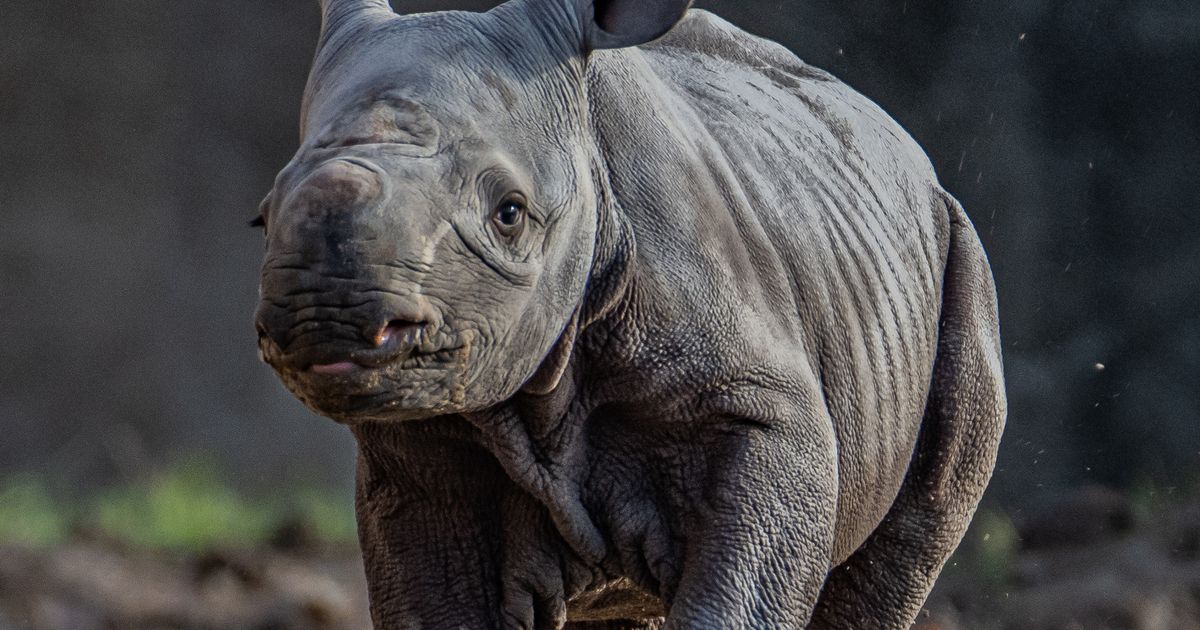
It is important to note that Javan rhinos have given birth before in Ujung Kulon. Rangers have occasionally found footprints of very small calves or heard vocalizations that suggest a birth. However, no high-quality visual documentation has ever existed. Previous evidence was always circumstantial: a set of tiny hoof prints, a placenta discovered on the trail, or a camera trap image of a mother with a calf that was already several months old. The leap from indirect evidence to direct video confirmation is monumental for three reasons:
A. Scientific Data: The footage provides accurate timelines for labor duration, calf mobility, and maternal care. Veterinarians can now model normal versus abnormal birth parameters, which will aid in future interventions if a mother is found struggling in the wild.
B. Public Engagement: For decades, the Javan rhino has suffered from a lack of public awareness compared to mountain gorillas or giant pandas because they are so rarely seen. A video of a birth is inherently viral. It transforms an abstract statistic “only 80 remain” into a tangible, emotional story. The Indonesian Ministry’s YouTube upload of the footage received 2.3 million views in its first week.
C. Anti-Poaching Messaging: Poachers trade in animal parts, but they cannot trade in hope. By showing that the population is reproducing naturally and vigorously, the Indonesian government sends a clear signal that the rhinos are recovering under their protection. This discourages would-be poachers who might believe the species is already functionally extinct.
Conservation Implications and Next Steps
While the birth celebration is justified, conservationists are careful not to declare victory. One calf does not save a species. However, it does buy time and provide momentum. The Indonesian government, in partnership with the International Rhino Foundation (IRF) and WWF-Indonesia, has outlined a five-point strategy building on this success:
A. Expand Suitable Habitat: Ujung Kulon is only 1,227 square kilometers, and not all of it is prime rhino habitat. Populations of rhinos in a single location face extinction from a volcanic eruption nearby Krakatoa is still active or a tsunami. The government is accelerating plans to establish a second population in the Way Kambas National Park on Sumatra. This would require translocating at least ten rhinos, a delicate and risky operation. The birth footage has renewed public and political will to fund this translocation.
B. Intensify Anti-Poaching Patrols: Ironically, the publicity around the birth could attract poachers. Javan rhino horn is worth more than gold on the black market, exceeding $100,000 per kilogram. The park has increased its Rhino Protection Units (RPUs) from 60 to 85 personnel in the last six months. These units are elite, ex-military rangers who patrol 15 days per month, often under armed guard due to encounters with illegal loggers and fishermen.
C. Genetic Management: Because the population descended from a very small number of ancestors (likely fewer than 15 individuals in the 1960s), there is significant inbreeding depression. Scientists have collected fecal samples from the mother and newborn calf for DNA analysis. If the calf shows high heterozygosity (genetic diversity), it will be prioritized for future breeding pairings. If not, conservationists may consider a controversial proposal for genetic rescue a one-time, carefully managed introduction of a Sumatran rhino as a surrogate, though this remains theoretical.
D. Invasive Species Control: The Arenga palm continues to spread. Each year, volunteer work crews manually cut and poison over 100,000 palm seedlings. The birth has attracted corporate sponsorship for this labor-intensive work, with several Indonesian conglomerates pledging funds to hire 50 full-time cutters.
E. Community Engagement: Local villages bordering the park used to view rhinos as nuisances that trampled crops. The government has expanded its “rhino guardian” program, where villagers are employed as trackers, camera maintenance technicians, and ecotourism guides. Since the birth video was released, applications for these jobs have tripled.
Behavioral Ecology of the Javan Rhino: Context for the Birth
To fully appreciate the footage, one must understand how Javan rhinos differ from other rhino species. The Javan rhino is sometimes called the “least known large mammal” because of its extreme shyness and preference for dense, impenetrable thickets. While African rhinos graze in open savannas where they can be observed from vehicles, the Javan rhino is a browser that lives only in deep forest. It rarely leaves mud wallows and almost never ventures onto roads or trails where humans might be.
The mother in the video is an individual identified by ear notches and facial wrinkles as “Pandawa,” a female first photographed in 2010 as a juvenile. She has given birth twice before, but those calves were only inferred from footprints. Pandawa’s behavior during the birth demonstrates several key adaptations:
A. Seclusion: She chose a birthing site 800 meters from the nearest known rhino trail, underneath a dense stand of bamboo. This seclusion reduces the chance of male rhinos approaching, as males have been known to attack calves that are not their own.
B. Mud Wallow Proximity: The birthing site was only 120 meters from a permanent mud spring. Rhinos are semi-aquatic and will not give birth far from water. The calf needs to be able to reach water within hours to regulate its body temperature.
C. Vocal Restraint: Throughout the birthing process, Pandawa made extremely low-frequency sounds (infrasound) that travel long distances through the ground but are inaudible to predators. The calf responded with soft, high-pitched squeaks that only the mother could localize.
Threats That Remain
Despite this success, the future of the Javan rhino is far from secure. The very same day the birth footage was reviewed by scientists, a separate camera trap caught images of a mature male with a gaping wound on its flank possibly from fighting, possibly from a sharpened bamboo spear set by a poacher. The wound was infected, and despite a veterinary intervention attempt by drone-darted antibiotics, the male’s fate remains unknown.
Key ongoing threats include:
A. Poaching: While Ujung Kulon has had no confirmed rhino poaching since 2018, the arrest of three Vietnamese nationals in 2023 attempting to reach the park with homemade silencers showed that the threat never disappeared. The syndicates operate with sophisticated intelligence, sometimes using corrupt local fishermen to drop them on remote beaches.
B. Disease: The entire Javan rhino population is vulnerable to a single pathogen. Anthrax outbreaks have killed several rhinos in Ujung Kulon in the past, and foot-and-mouth disease remains a concern because domestic buffalo graze near park boundaries. Vaccination protocols are being developed, but delivering vaccines to wild rhinos via dart is stressful and imperfect.
C. Climate Change: Rising sea levels threaten to submerge the coastal lowlands of Ujung Kulon, which constitute nearly 40% of rhino habitat. Increased rainfall intensity causes erosion of wallows and makes some areas inaccessible. Extended dry seasons, conversely, dry up mud sources that rhinos use for thermoregulation.
How the Public Can Help
The release of the birth footage has galvanized ordinary people who previously felt powerless to help an animal on the other side of the world. Conservation organizations have seen a 400% increase in donations designated for Javan rhinos since the video went viral. However, money is not the only need.
Practical actions individuals can take include:
A. Support Certified Anti-Poaching Organizations: Not all groups working in Indonesia are legitimate. Donors are urged to verify that their chosen charity such as the International Rhino Foundation or the Asian Rhino Project has direct on-the-ground partnerships with the Indonesian Ministry of Environment.
B. Avoid Buying Rhino Horn Products: Even as a joke or souvenir. Social media posts pretending to sell horn only normalize the trade. If you see online advertisements for rhino horn, report them to the CITES (Convention on International Trade in Endangered Species) enforcement hotline.
C. Spread Accurate Information: Many people mistakenly believe that rhino horn has medicinal properties. It is made of keratin, the same substance as human fingernails, and has no proven health benefits. Sharing the birth video along with a factual caption about keratin reduces demand.
D. Ecotourism with Responsibility: While Ujung Kulon is difficult to visit requiring a permit, a boat ride, and a guide responsible ecotourism operators donate a portion of fees to rhino protection. Tourists must never attempt to find or approach rhinos. The goal is to appreciate the forest, not to see a rhino at close range.
A Future Built on One Small Hoofprint
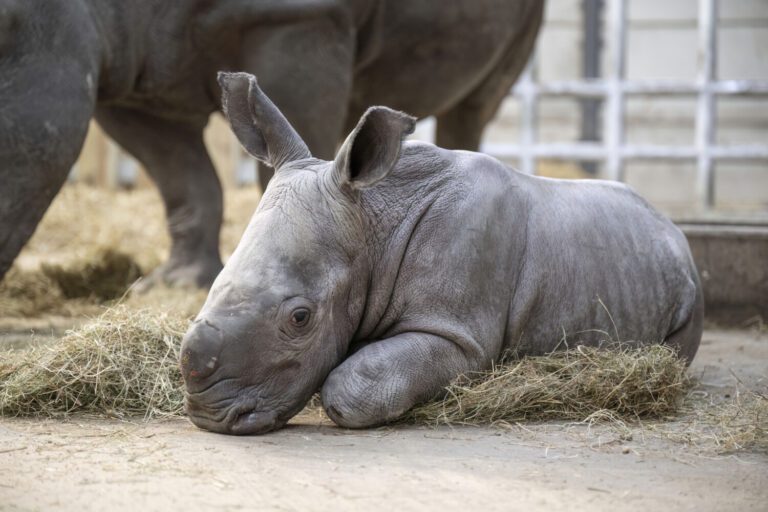
In the end, the birth of one Javan rhino calf, caught on a modest camera trap in a forgotten corner of Java, is both a small event and a monumental one. It is small because the species still hangs by a thread. One disease outbreak, one cyclone, one poaching syndicate could erase all progress. But it is monumental because it proves that the thread has not snapped. The mother patient, wild, and ancient in her genes knew what to do. She found her secluded spot, labored without assistance, cleaned her baby, led it to mud, and began the long, slow process of raising another generation.
The camera trap that captured this birth is now famous. It will be retired and placed in a conservation museum in Jakarta as a relic of historical importance. But hundreds more cameras remain hidden in the jungle, their memory cards slowly filling with images of sleeping rhinos, foraging tapirs, and perhaps if fortune favors the brave another birth.
For every person who watches the video and feels a surge of hope, there is a corresponding responsibility. The Javan rhino does not need admiration from a distance. It needs trees to eat, water to wallow in, and a forest free of snares. The birth caught on film is not the end of the story. It is the beginning of a new chapter one where humanity finally proves that it can share the planet with its most ancient giants.
As the sun sets over Ujung Kulon, the unnamed calf takes its first wobbly steps away from its mother, not toward the camera, but deeper into the jungle. It leaves behind a footprint in the wet mud: small, perfect, and alive. That footprint is the only monument that matters.