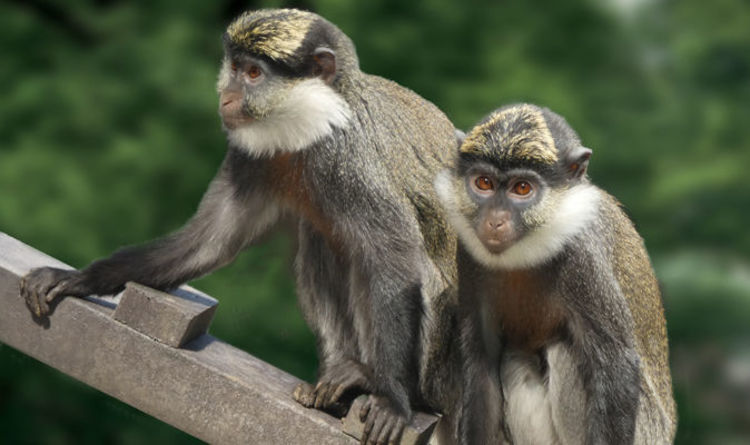
In a world where wildlife trafficking has become one of the most profitable and destructive black-market industries, stories of successful rescues offer rare but powerful glimmers of hope. One such inspiring event recently unfolded in a bustling, congested animal market in Southeast Asia a location infamous for its role in the clandestine trade of exotic and endangered species. There, authorities and conservationists together achieved a significant victory: the dramatic rescue of an exceptionally rare monkey, a species so elusive that few have ever seen it in the wild. This rescue not only saved a single life but also drew global attention to the relentless pressures threatening primate biodiversity.
The animal in question is a member of the Presbytis genus, more commonly known as the Raffles’ banded langur, though local names vary. These leaf-eating monkeys are extraordinarily rare, with total remaining populations estimated at fewer than 100 mature individuals in their natural habitats. The rescue operation, executed swiftly and covertly, prevented what would have been an irreversible loss to both the species and the broader ecological web. But the story does not end with the rescue itself; it extends into the complex arenas of rehabilitation, law enforcement, public awareness, and long-term conservation strategy.
The Market Setting: A Hub of Illicit Wildlife Commerce
The market where this rare monkey was discovered is no ordinary marketplace. Located on the outskirts of a major metropolitan area, the venue is a labyrinth of narrow alleyways, makeshift wooden stalls, and cloth canopies that block out the tropical sun. By day, it appears to sell vegetables, spices, and household goods. But for those who know where to look or who pay the right bribes the back corridors reveal a hidden economy of living creatures.
A. Cages stacked three meters high, containing songbirds, slow lorises, and pangolins.
B. Enclosures made of chicken wire, holding turtles, civets, and juvenile pythons.
C. Opaque bags and wooden crates, often concealing the most endangered species, including primates.
D. Vendors who operate without licenses, moving their stock frequently to avoid detection.
E. Buyers ranging from local exotic pet enthusiasts to international traffickers with shipping connections.
The rare monkey was found in a rusted, cramped birdcage barely large enough for a house cat. It was dehydrated, malnourished, and visibly distressed. According to undercover investigators who had monitored the market for weeks, the animal had been captured from a fragmented rainforest pocket roughly 200 kilometers away. Its captors reportedly intended to sell it to a private collector a fate that almost certainly would have meant death within months, given the species’ specific dietary and social needs.
Physical and Behavioral Description of the Rescued Primate
Upon rescue, the monkey later named “Lestari,” meaning “everlasting” in the local language was examined by a team of veterinarians specializing in exotic wildlife. Lestari exhibited the distinct physical characteristics of the Raffles’ banded langur, which include:
A. A predominantly dark gray to black dorsal coat, providing camouflage in the forest canopy.
B. A striking white band across the forehead and cheeks, resembling a natural crown.
C. White-tipped tail that can grow longer than the body itself, used for balance during arboreal locomotion.
D. A slender, elongated physique adapted for leaping between tree branches at heights exceeding 30 meters.
E. Large, forward-facing eyes with excellent depth perception, essential for judging distances in dense foliage.
Behaviorally, Lestari showed signs of extreme trauma. Initially, she refused to eat or drink, huddling in the corner of her quarantine enclosure. She displayed repetitive pacing a common stereotypic behavior in primates held in captivity under stressful conditions. However, within 48 hours of professional care, including rehydration therapy and the introduction of leaves from her native diet (such as Ficus and Macaranga species), she began to show curiosity about her surroundings. Soft vocalizations, typically used for group cohesion in the wild, were heard for the first time on the third day post-rescue.
The Rescue Operation: Step-by-Step Coordination
The rescue did not happen by chance. It was the result of meticulous planning and cooperation among several entities:
A. Intelligence Gathering – Local wildlife watchdog NGOs had placed informants within the market for three months. Photographs and GPS coordinates were collected without alerting the vendors.
B. Legal Authorization – A warrant was obtained from the regional environmental court, citing violations of the Convention on International Trade in Endangered Species (CITES) and domestic wildlife protection laws.
C. Sting Operation Execution – On the designated morning, plainclothes officers posed as buyers requesting a “high-value, leaf-eating monkey.” When the vendor produced Lestari from a hidden back room, the signal was given.
D. Simultaneous Raids – While the primary team secured Lestari and arrested the vendor, secondary teams raided three other stalls linked to the same trafficking network, rescuing 14 additional animals (including two other primate species).
E. Chain of Custody – Evidence was meticulously documented, including photographs of the cage, weighing scales, price tags, and cash transactions. This ensured the case would withstand legal scrutiny.
F. Medical Triage – Lestari was immediately transported to a pre-arranged wildlife rehabilitation center, bypassing public areas to minimize stress.
The entire operation, from infiltration to extraction, lasted approximately six hours. No humans were injured, and the vendor now faces up to seven years imprisonment and a substantial fine.
The Plight of the Raffles’ Banded Langur: Why Rarity Matters

To fully appreciate the significance of this rescue, one must understand the conservation status of Presbytis femoralis. The species is endemic to a narrow stretch of lowland rainforests in parts of Indonesia, Malaysia, and Singapore. However, due to habitat fragmentation, palm oil plantation expansion, and hunting pressure, viable populations have collapsed.
Current estimates from the International Union for Conservation of Nature (IUCN) list the Raffles’ banded langur as Critically Endangered. Key factors include:
A. Population size fewer than 250 mature individuals across all known subpopulations.
B. Severe fragmentation resulting in isolated groups that cannot interbreed, leading to genetic bottleneck effects.
C. Declining birth rates in disturbed habitats, possibly due to nutritional stress and increased predation.
D. Continued threats from snare traps set not for primates but for wild pigs and deer, which inadvertently catch langurs.
E. Illegal pet trade demand, particularly for infants, which are often captured after the mother is killed.
Lestari, being a juvenile female, represented not only a single life but also a significant portion of the future breeding potential of her species. Each individual in such a small population is invaluable.
Rehabilitation and Long-Term Care Plan
Rescuing an animal from a market is only the first chapter. The journey back to health and, ideally, to the wild is long and uncertain. Lestari is currently housed in a specialized primate rescue facility that follows international standards for rehabilitation. The care plan consists of several phases:
Phase 1: Quarantine and Medical Stabilization (1–4 weeks)
A. Complete blood work and pathogen screening for zoonotic diseases such as tuberculosis and herpes B virus.
B. Nutritional rehabilitation using natural browse (fresh leaves, young shoots, flowers) supplemented with primate-specific vitamins.
C. Isolation from humans and other animals to reduce stress and observe baseline behavior.
D. Daily monitoring of fecal samples for parasites and gastrointestinal health.
Phase 2: Socialization and Behavioral Enrichment (2–6 months)
A. Gradual introduction to a same-species companion, if one becomes available from another rescue.
B. Installation of climbing structures that mimic forest strata, including ropes, lianas, and platforms at varying heights.
C. Foraging puzzles to encourage natural leaf-searching and manipulation behaviors.
D. Sound desensitization using recorded forest ambience and, conversely, human noise to prepare for potential release.
Phase 3: Pre-Release Assessment (6–12 months)
A. Evaluation of predator recognition, including reactions to models of pythons, eagles, and civets.
B. Assessment of locomotor competence can she leap accurately and brachiate without hesitation?
C. Social integration trials if a release group can be formed.
D. Genetic matching to ensure that release candidates come from the same or adjacent population lineages.
Phase 4: Soft Release or Captive Assurance
Given the extreme rarity of the species, a decision will be made by a panel of primatologists. Two options exist:
A. Soft release into a well-protected, predator-managed forest fragment with post-release monitoring via radio collar.
B. Captive assurance colony within a large, naturalistic enclosure designed for breeding, contributing to a species survival plan.
No decision has been finalized, but early indicators show Lestari has strong survival instincts. She avoids unfamiliar objects and shows fear of ground-level movement both positive signs.
Legal and Ethical Dimensions of Wildlife Market Rescues
The rescue of a rare monkey from a market raises important legal and ethical questions that extend beyond this single event.
A. Law Enforcement Gaps – Many countries have strong wildlife protection laws on paper but weak enforcement. Corruption at checkpoints and market levels allows traffickers to operate with near impunity.
B. Demand Reduction – Conservationists argue that rescues alone are not enough. Public awareness campaigns must target the buyers collectors, tourist photographers, and traditional medicine users who create demand.
C. Rehabilitation vs. Euthanasia – Some wildlife authorities argue that resources should not be spent on individuals from critically endangered species if release is unlikely. However, this position is controversial and contradicted by modern conservation ethics that prioritize every individual in small populations.
D. Genetic Integrity – Releasing a rescued animal into a wild population must be done with caution to avoid introducing diseases or disrupting local social structures. DNA analysis is mandatory before any release.
E. Economic Incentives – Some NGOs are experimenting with programs that pay former trappers to become wildlife guardians or ecotourism guides. This transforms a threat into a conservation asset.
The Lestari case has already been cited in two regional legal proceedings as precedent for stricter sentencing. Activists hope this will deter future attempts to capture and sell rare primates.
How the Public Can Help Prevent Wildlife Trafficking
While the rescue of a rare monkey from a market makes headlines, the broader public often feels powerless to contribute. However, meaningful action is possible at multiple levels:
A. Support Accredited Sanctuaries – Never visit or donate to facilities that allow direct contact with primates (photo ops, feeding, riding). These often fuel the trafficking cycle. Instead, support sanctuaries accredited by the Global Federation of Animal Sanctuaries.
B. Report Suspicious Activity – In many countries, wildlife crime hotlines exist. If you see a live monkey, slow loris, or other primate for sale in a market or online, document it and report it anonymously.
C. Be a Responsible Traveler – Never buy souvenirs made from animal parts (teeth, fur, bones). Avoid taking selfies with captive wildlife; each such photo creates market demand.
D. Advocate for Stronger Laws – Write to local representatives and ask for increased funding for wildlife law enforcement. Share articles like this one on social media to raise awareness.
E. Reduce Deforestation Footprint – Choose products that are certified deforestation-free (e.g., sustainable palm oil, FSC-certified wood). Habitat loss is the ultimate driver of the illegal wildlife trade.
Comparative Cases: Successes and Failures in Primate Rescue
To contextualize this rare monkey rescue, it is useful to examine other notable primate rescues from markets in recent years.
| Case | Species | Outcome | Key Lesson |
|---|---|---|---|
| 2021, Vietnam | Red-shanked douc | Released after 18 months rehabilitation | Successful when local community engaged |
| 2019, Thailand | Lar gibbon | Died during quarantine | Inadequate veterinary preparation |
| 2022, Indonesia | Javan slow loris | Placed in breeding center | Teeth removed by traffickers, impossible to re-release |
| 2024, Malaysia | Raffles’ banded langur (Lestari) | Ongoing rehabilitation | Early veterinary intervention critical |
Lestari’s case stands out because of the speed of the rescue and the immediate access to specialized care. Many rescued primates die within the first week due to dehydration, stress cardiomyopathy, or undiagnosed injuries. Lestari survived that critical window, and her prognosis is currently listed as good to excellent.
The Role of Technology in Future Rescues
Emerging technologies are transforming how rare animals are rescued from markets. Conservationists are now using:
A. Drone surveillance to map market layouts and identify back-room holding areas without physical infiltration.
B. AI-powered species recognition from camera trap and undercover video footage, instantly identifying a monkey as a CITES-protected species.
C. Blockchain for chain of custody to ensure that seized animals are not re-entering the black market through corrupt officials.
D. Portable DNA sequencers that can, within two hours, confirm a primate’s subspecies from a hair or saliva sample critical for legal prosecution.
E. Satellite tracking collars for released animals, providing real-time data on movement and survival.
These tools require funding and training, but pilot projects in Borneo and Sumatra have already shown promise. Donations to organizations deploying such technology can dramatically increase rescue success rates.
Conclusion: One Rescue, Many Ripples
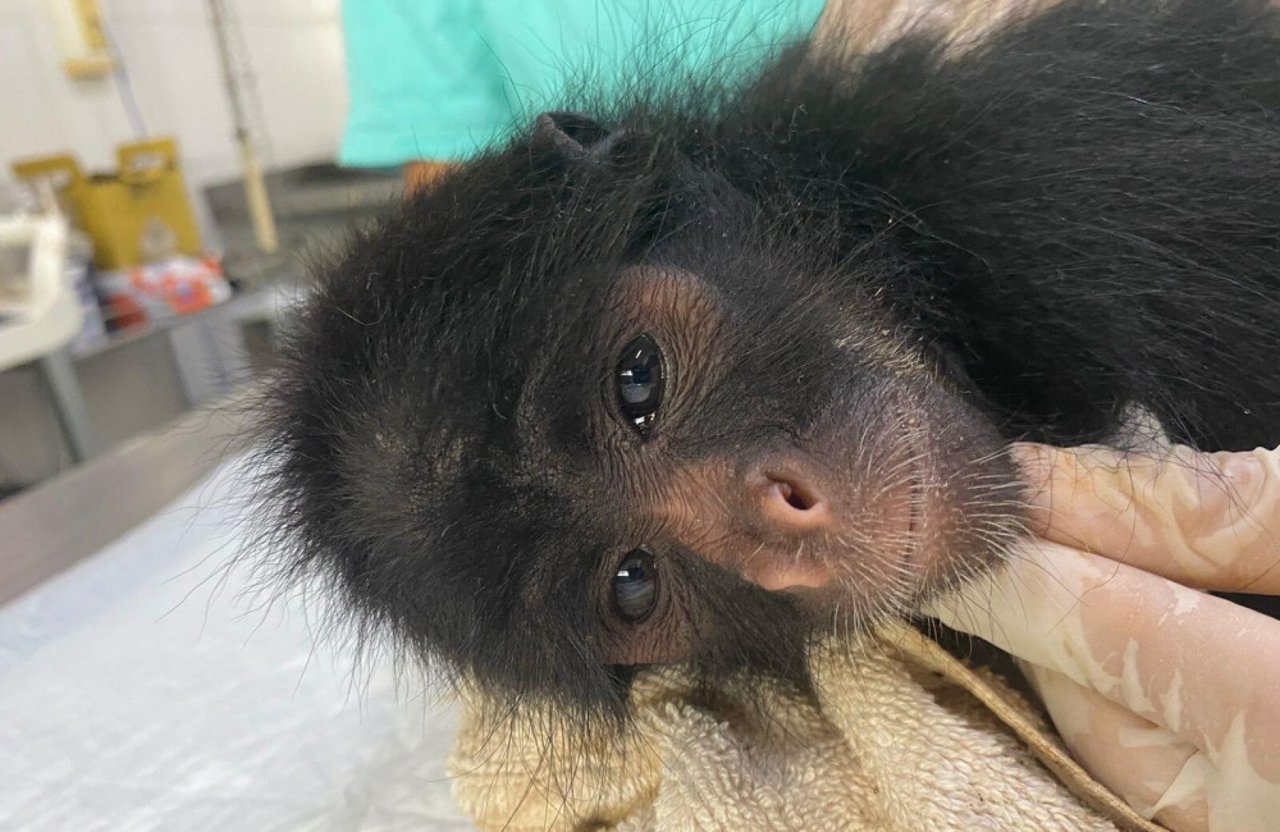
The story of Lestari the rare monkey rescued from a market is far more than a single news cycle. It is a testament to what dedicated individuals and organizations can achieve when they refuse to look away from the cruelty of the illegal wildlife trade. Yet it is also a sobering reminder that behind every rescued animal, countless others are not so lucky. Populations continue to decline, habitats continue to shrink, and the demand for exotic pets continues to rise in some quarters.
Each of us holds a measure of responsibility. Whether by changing our purchasing habits, supporting ethical sanctuaries, or simply sharing accurate information, we contribute to a culture where trafficking becomes stigmatized and unprofitable. Lestari may never fully understand the human efforts that saved her life, but she will live and perhaps one day, swing freely through the canopy again. That possibility alone makes every hour of surveillance, every dollar donated, and every law enforced entirely worthwhile.