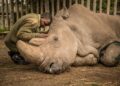
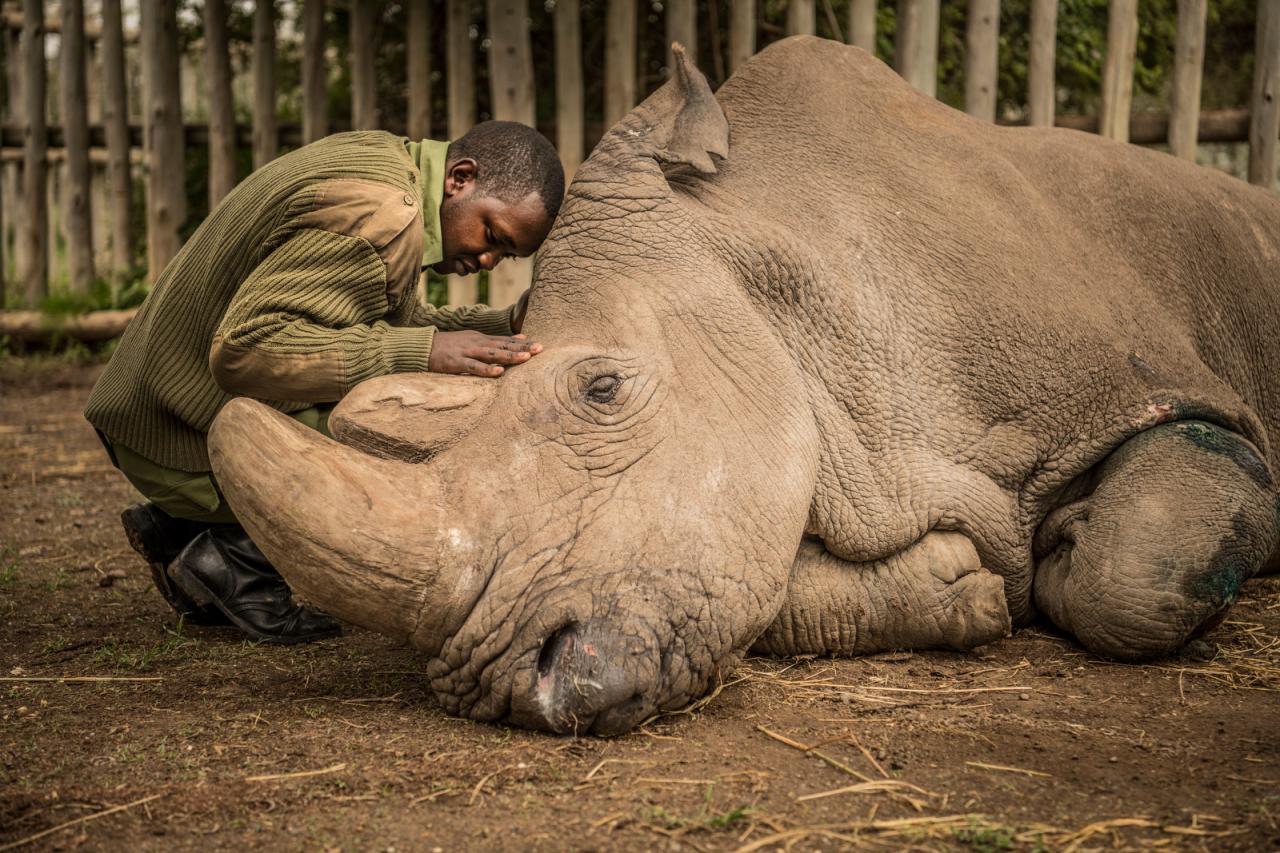
On March 19, 2018, the world stood still for a moment of silent grief. Sudan, the last known male northern white rhinoceros (Ceratotherium simum cottoni), took his final breath at the Ol Pejeta Conservancy in Kenya. Surrounded by armed guards and a heartbroken team of veterinarians and conservationists, Sudan’s death marked more than the loss of a single magnificent creature it signaled the functional extinction of his entire subspecies.
For decades, the northern white rhino had been slipping silently toward the abyss. Despite global efforts, awareness campaigns, and millions of dollars poured into protection programs, humanity failed to save this unique branch of the rhino family tree. With Sudan’s passing, only two female northern white rhinos remain alive: his daughter Najin and his granddaughter Fatu. Both live under 24-hour armed surveillance at the same conservancy, but neither can carry a pregnancy to term.
This article explores the rise and fall of the northern white rhino, the life and legacy of Sudan, the causes behind this heartbreaking extinction, the cutting-edge science attempting a miracle, and the hard lessons humanity must learn before more species disappear forever.
Part 1: Who Was Sudan?
Sudan was not just an animal he was a symbol. Captured from the wild in southern Sudan (now South Sudan) in 1975 when he was only about two years old, Sudan was transported to the Dvůr Králové Zoo in the Czech Republic. At that time, no one could have predicted he would one day become the most famous rhinoceros on Earth.
For nearly three decades, Sudan lived a quiet life in European captivity. He was part of a small breeding group of northern white rhinos that had been brought from Africa in an attempt to maintain a viable captive population. However, breeding efforts were limited, and the group produced few offspring.
In 2009, conservationists realized that time was running out. The northern white rhino population in the wild had already collapsed due to rampant poaching and civil wars in their native ranges of Uganda, Chad, Sudan, and the Democratic Republic of Congo. Sudan, along with three other captive northern whites, was relocated to Ol Pejeta Conservancy in Kenya. The plan was brilliant yet desperate: place them in a semi-wild environment with natural foods, open savannah, and round-the-clock protection to encourage natural breeding.
Unfortunately, nature did not cooperate. Despite several attempts, Sudan never successfully mated again after arriving in Africa. By 2014, it became clear that artificial reproductive technologies were the only remaining hope. Sudan’s sperm had already been harvested and cryopreserved years earlier, but the two remaining females had health issues that prevented natural or artificial conception.
In his final years, Sudan became an Internet sensation. A dating app called Tinder partnered with Ol Pejeta to list Sudan as “the most eligible bachelor in the world,” hoping to raise funds for fertility research. Tourists, journalists, and celebrities traveled thousands of miles just to kneel beside him and run their hands along his wrinkled gray hide. He was more than a rhino he was a living apology for humanity’s failures.
As age caught up with him, Sudan developed painful degenerative muscle and bone issues. A painful infection on his right leg did not respond to treatment. After his condition deteriorated rapidly in March 2018, the veterinary team made the heart-wrenching decision to euthanize him. At 45 years old, Sudan died surrounded by the people who had fought for him until the very end.
Part 2: The Northern White Rhino – A Subspecies on the Edge
To understand the weight of Sudan’s death, one must first understand the creature he represented.
A. Physical Characteristics
The northern white rhino is a subspecies of the white rhinoceros. It shares many traits with its more numerous southern cousin, but there are distinct differences:
-
Size: Adult males weigh between 1,500 and 2,500 kilograms (3,300 to 5,500 pounds). Sudan stood approximately 1.8 meters (6 feet) at the shoulder.
-
Horns: Two horns made of keratin (the same material as human fingernails). The front horn averages 60–150 centimeters in length.
-
Mouth shape: Wide, square lips adapted for grazing on grasses hence the name “white,” derived from the Afrikaans word “wyd” (wide).
-
Skin color: Grayish-brown, not white. The misleading name comes from historical mistranslation.
B. Distinct Differences from the Southern White Rhino
While both are classified as white rhinos, genetic and morphological studies confirm significant divergence:
-
Genetics: Northern white rhinos have different mitochondrial DNA and microsatellite markers.
-
Hair and skin folds: Subtle differences in body hair distribution and skin fold orientation.
-
Reproductive anatomy: Variations in the shape and size of the female reproductive tract, which matter for artificial insemination attempts.
-
Tooth structure: Differences in molar ridge patterns used by paleontologists and zoologists to distinguish remains.
C. Historical Range and Habitat
Historically, northern white rhinos roamed the open grasslands, savannahs, and woodlands of:
-
Northwestern Uganda
-
Northeastern Democratic Republic of Congo (Garamba National Park)
-
Southern South Sudan
-
Southeastern Central African Republic
-
Small pockets in eastern Chad
Unlike black rhinos, which are browsers that eat leaves and twigs, white rhinos are grazers. They require vast grassland areas with permanent water sources. Herds of up to fourteen individuals, normally led by a dominant male, once covered these regions.
D. Behavior and Social Structure
-
Northern white rhinos were relatively social compared to other rhino species.
-
Females and juveniles formed small nursery groups.
-
Dominant males patrolled territories of 2–10 square kilometers, marking boundaries with dung piles (middens).
-
They communicated through vocalizations including grunts, growls, and a distinctive “whining” sound.
-
Despite their enormous size, they could run at speeds up to 50 kilometers per hour (31 miles per hour).
Part 3: The Road to Extinction – How Did This Happen?
The extinction of the northern white rhino was not a sudden event. It was a slow, predictable tragedy driven by human activities over several decades.
A. Poaching for Horns – The Primary Driver
The rhinoceros horn has been prized in parts of Asia, particularly Vietnam and China, for two main reasons:
-
Traditional “medicine”: Despite zero scientific evidence, rhino horn powder is falsely believed to cure everything from fevers and hangovers to cancer.
-
Status symbol: Carved horns are displayed as symbols of wealth and success, often gifted at business dinners and official events.
The price of rhino horn skyrocketed during the 2000s and 2010s, reaching up to 60,000–100,000 per kilogram making it more valuable by weight than gold or cocaine. This economic incentive overwhelmed law enforcement in many African nations.
B. Civil Wars and Political Instability
The northern white rhino’s native range has been plagued by civil wars, rebel militias, and weak governments for more than four decades:
-
Uganda (1970s–1980s): Idi Amin’s rule and subsequent civil war destroyed wildlife protection infrastructure.
-
Sudan/South Sudan (1983–2005, 2013–present): Long-term conflicts displaced rangers and armed poachers with military-grade weapons.
-
Democratic Republic of Congo (1996–2003, ongoing conflicts): The Garamba National Park, once a stronghold for northern whites, became a battleground where park rangers fought against the Lord’s Resistance Army and Sudanese poachers.
C. Lack of Political Will and Funding
While environmental organizations sounded alarms as early as the 1980s, international response was slow. Conservation funding for rhinos was dwarfed by budgets for more “charismatic” flagship species like elephants, tigers, and giant pandas. The northern white rhino, living in war zones, was difficult to reach and expensive to protect.
D. Failed Captive Breeding Programs
Zoos in Europe and North America attempted to maintain a self-sustaining captive population, but several mistakes were made:
-
Insufficient genetic diversity in founding animals.
-
Poor understanding of reproductive stress in captivity.
-
Separation of males and females for decades without structured breeding plans.
-
Delayed relocation to natural environments (by the time Ol Pejeta received Sudan and his companions, most females were past optimal breeding age).
By 2008, a comprehensive survey confirmed that the northern white rhino was extinct in the wild. The only survivors were a handful of captive individuals distributed among zoos in the Czech Republic, the United States, and Japan.
Part 4: The Remaining Two – Najin and Fatu
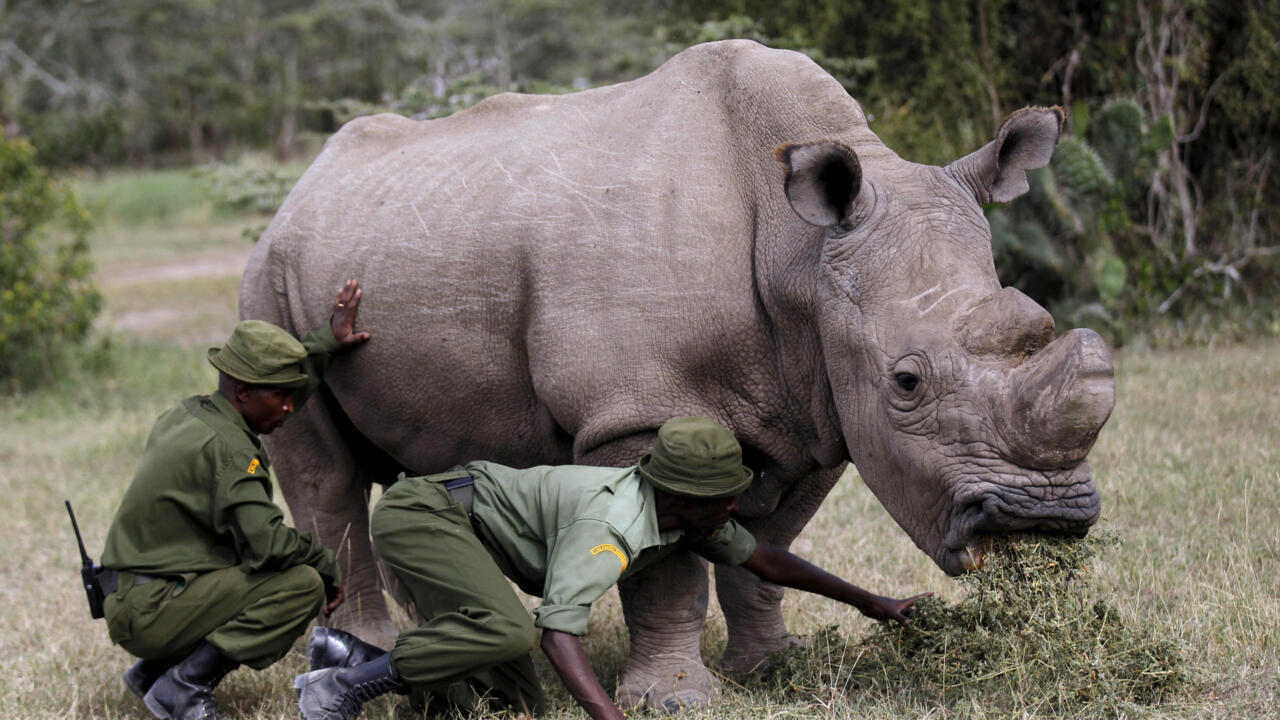
As of this writing, only two northern white rhinos exist on Earth. Both are female, both live at Ol Pejeta Conservancy in Kenya, and both are the direct descendants of Sudan.
A. Najin (Born 1989)
Najin is Sudan’s daughter. She was born in the Dvůr Králové Zoo in the Czech Republic and returned to Africa alongside her father in 2009. At 31 years old (as of 2021), she has age-related health issues including:
-
Degenerative joint disease affecting her back legs.
-
Cystic ovaries and irregular estrus cycles.
-
Old uterine adhesions that prevent embryo implantation.
Despite multiple attempts, Najin has never successfully carried a pregnancy to term.
B. Fatu (Born 2000)
Fatu is Najin’s daughter and Sudan’s granddaughter, making her the youngest of the pair at 21 years old. While physically healthier and having regular estrus cycles, Fatu suffers from a degenerative uterine condition that renders her incapable of supporting an embryo.
Because both remaining females cannot reproduce naturally, the subspecies is functionally extinct. Unless assisted reproductive technology succeeds, Najin and Fatu will be the last northern white rhinos ever seen alive.
C. Life Under 24-Hour Armed Protection
Both rhinos live in a 700-acre fenced enclosure patrolled day and night by armed rangers from the Kenya Wildlife Service and private security teams. Their security includes:
-
Motion-sensor cameras and thermal drones.
-
GPS tracking devices implanted in their horns.
-
Rapid response vehicles ready to intercept any intruder.
-
A specialized veterinary team that conducts regular health checks.
The monthly cost of keeping Najin and Fatu alive and protected exceeds $100,000, funded by donations from international conservation groups and public fundraising campaigns.
Part 5: The Scientific Race to Reverse Extinction
Sudan’s death did not end the story. In fact, it sparked the most ambitious assisted reproduction project ever attempted for a terrestrial mammal.
A. Harvesting Genetic Material
Before Sudan’s death, scientists at the Avantea Laboratory in Cremona, Italy, led by reproductive biologist Professor Cesare Galli, had already extracted and cryopreserved:
-
Sudan’s sperm (collected multiple times between 2010 and 2015).
-
Skin biopsies (fibroblasts) from Sudan, Najin, Fatu, and several other deceased northern white rhinos stored in cryobanks.
B. The IVF Plan – Step by Step
The team at BioRescue, an international consortium of scientists, veterinarians, and conservationists, laid out a multi-stage plan:
| Step | Action |
|---|---|
| 1 | Harvest oocytes (eggs) from Najin and Fatu under general anesthesia—a high-risk procedure given their ages and health conditions. |
| 2 | Fertilize the eggs in a laboratory using frozen sperm from Sudan or other deceased northern white males. |
| 3 | Allow fertilized embryos to develop for 7–10 days in specialized culture media. |
| 4 | Implant the resulting embryos into surrogate southern white rhino females. |
| 5 | Monitor surrogates through pregnancy (16 months gestation) and deliver northern white rhino calves. |
C. Major Breakthroughs Achieved
By early 2020, the team announced two historic successes:
-
Successful egg harvesting: In August 2019, veterinarians extracted ten oocytes from Fatu (Najin’s poor health prevented egg collection from her). Of those, two were successfully fertilized using Sudan’s frozen sperm.
-
Creation of viable embryos: Both fertilized eggs developed into viable embryos, which were cryopreserved for future implantation.
-
Second harvest (2020): A second procedure yielded additional eggs from Fatu, with more embryos created.
As of late 2021, BioRescue had created a total of five northern white rhino embryos, all stored in liquid nitrogen at minus 196 degrees Celsius, waiting for surrogate implantation.
D. The Surrogate Challenge
Northern white rhino embryos cannot be implanted into Najin or Fatu (both are reproductively non-functional). Instead, scientists plan to use southern white rhino females as surrogates. The southern white rhino is the closest living relative, with near-identical gestation and anatomy.
However, challenges remain:
-
No surrogacy has ever been successfully performed in rhinos.
-
The immune system of a southern surrogate might reject a northern embryo.
-
The procedure requires precise hormonal synchronization between donor and recipient.
-
Ethical questions exist: should surrogates be wild or captive? How many attempts before stopping?
If surrogacy succeeds, the first northern white rhino calf born in decades could take its first breath as early as 2023–2024. But one calf or even ten calves will not restore a viable population. Hundreds of genetically diverse individuals would be required to rebuild the subspecies.
E. Stem Cells and De-Extinction Futures
Beyond IVF, scientists have also generated induced pluripotent stem cells (iPSCs) from preserved northern white rhino skin cells. These stem cells could theoretically be used to create sperm and eggs without needing living donors. Even more ambitiously, researchers have discussed the possibility of using CRISPR gene editing to convert southern white rhino cells into northern rhino cells though that technology remains years or decades away.
Part 6: Lessons for Other Endangered Species
The death of the last male northern white rhino offers brutal but necessary lessons for global conservation.
A. The Southern White Rhino – A Model Success Story
It is important to note that not all white rhinos are dying. The southern white rhino subspecies was once nearly extinct as well. In the late 1800s, fewer than 100 remained in South Africa. Through dedicated protection, translocation, and community-based conservation, the southern white rhino population rebounded to over 20,000 individuals today. This proves that extinction is not inevitable if action is taken early enough.
B. Key Lessons from the Northern White Rhino Collapse
-
Delay is deadly. When the international community finally mobilized for northern whites in the late 2000s, it was already too late. Conservation must be proactive, not reactive.
-
War zones need wildlife protection. Civil conflicts will continue to devastate biodiversity. Conservationists must work with peacekeepers and governments to integrate wildlife protection into post-conflict reconstruction.
-
Captive populations must be managed as a single genetic unit. Zoos need to coordinate breeding across institutions rather than keeping animals isolated.
-
Artificial reproduction cannot replace habitat protection. Even if IVF succeeds, northern white rhinos have no wild habitat left to return to. Their former ranges in Chad, DRC, and Sudan are still unsafe or ecologically degraded.
-
Public awareness matters. Sudan became a global celebrity only in his final years. Had that attention arrived twenty years earlier, the outcome might have been different.
C. What About Other Rhino Species?
Today, three other rhino species remain critically endangered:
-
Javan rhino: Roughly 75 individuals surviving only in Ujung Kulon National Park, Indonesia.
-
Sumatran rhino: Fewer than 80 individuals scattered in small Indonesian forest pockets.
-
Black rhino: Approximately 5,500 individuals, up from historic lows but still under intense poaching pressure.
Each of these species could follow the northern white rhino’s path within a decade if poaching and habitat loss are not stopped.
Part 7: What Can You Do to Help?
The extinction of the northern white rhino is a tragedy, but it does not need to become a pattern. Individuals, governments, and corporations can take meaningful action.
A. Support Anti-Poaching Efforts
| Organization | Focus Area | How to Help |
|---|---|---|
| Ol Pejeta Conservancy | Kenya rhino protection | Monthly donations, adopt Najin/Fatu symbolically |
| International Rhino Foundation | Global rhino conservation | Direct donations, rhino adoption programs |
| Save the Rhino International | Ranger training and community programs | Fund ranger boots, fuel for patrol vehicles |
| WWF | Policy and anti-trafficking campaigns | Sign petitions, donate to rhino crisis fund |
B. Reduce Demand for Rhino Horn
The most effective long-term solution is ending the demand for rhino horn. You can help by:
-
Educating friends and family about the lack of medical value in rhino horn.
-
Supporting campaigns that target consumers in Vietnam and China with truthful messaging.
-
Reporting any suspicious advertisements offering rhino horn for sale.
C. Advocate for Stronger Wildlife Laws
Governments must classify wildlife trafficking as a serious organized crime rather than a minor customs violation. Write to your elected representatives and demand:
-
Stricter sentencing for poachers and traffickers.
-
Increased funding for ranger forces and forensic wildlife crime units.
-
Diplomatic pressure on nations with high rhino horn demand.
D. Reduce Your Ecological Footprint
Habitat loss is the second leading cause of rhino declines. You can minimize your impact by:
-
Choosing sustainably sourced palm oil, soy, and paper products.
-
Reducing meat consumption (cattle ranching drives land conversion).
-
Supporting reforestation and land trust programs in rhino range countries.
E. Spread the Message
Share the story of Sudan, Najin, and Fatu on social media. Use hashtags like #ExtinctionIsForever, #SaveTheRhino, and #NorthernWhiteRhino. Public pressure has saved species before, including the American bison, the Arabian oryx, and the California condor.
Part 8: A Cautious Future – Hope or Farewell?
As the scientific team races against time, the future of the northern white rhino remains uncertain. On one hand, the creation of viable embryos is a landmark achievement never before accomplished in a mammal functionally extinct in the wild. If surrogacy succeeds, the world might witness the birth of a northern white rhino calf years after Sudan’s death a scientific miracle that would restore not just a subspecies but also public faith in conservation technology.
On the other hand, even a successful surrogacy program cannot bring back what truly died with Sudan: a wild, self-sustaining, genetically diverse population roaming freely across central African savannahs. The rhinos born in laboratories and raised in enclosures, however precious, will always be artifacts of human intervention never quite the same as their free-roaming ancestors.
Sudan’s eyes, in those final photographs taken hours before his death, seemed to hold an ancient weariness. He had outlived his entire subspecies. He had seen humans both protect him and destroy his kind. His death was a mirror held up to human civilization showing not only what we have lost, but also what we are capable of losing next.
The question now is not whether we can bring back the northern white rhino. The question is whether we have learned enough to save the Javan rhino, the Sumatran rhino, the vaquita, the Cross River gorilla, and the hundreds of other species currently standing at Sudan’s door.
Let his death not be a eulogy. Let it be a beginning.
Final Reflections
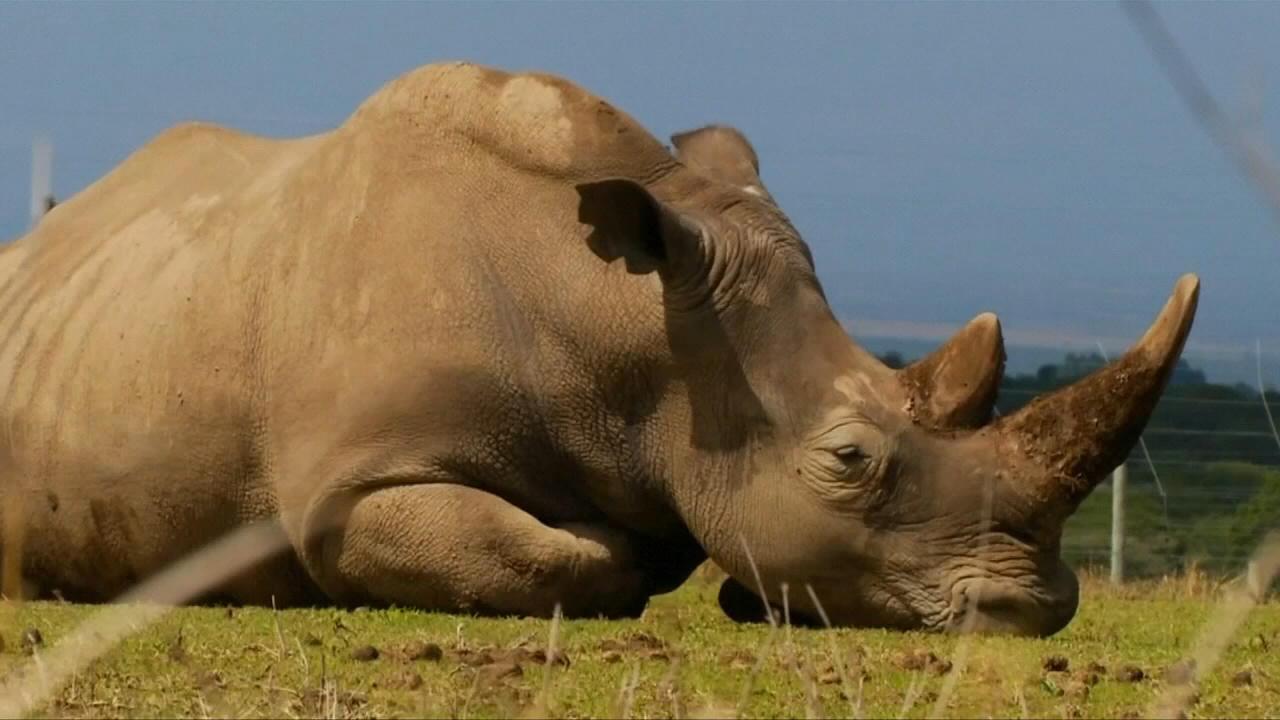
Extinction is not an event. It is a process a slow, almost imperceptible fading that happens one individual, one forest, one failed breeding season at a time. The last male northern white rhino died, but his cells live in freezers. His name lives in headlines. His image lives on millions of screens.
Whether that memory fuels real change or merely becomes another sad story lost in the tide of bad news is entirely up to us.
The rhinos cannot build fences. They cannot write laws. They cannot manufacture antiviral poisons or negotiate ceasefires. They can only eat grass, sleep in the African sun, and trust that the two-legged creatures with guns and cameras will make better choices tomorrow than they made yesterday.
Sudan trusted us until the end. Let us prove, however late, that his trust was not entirely misplaced.