
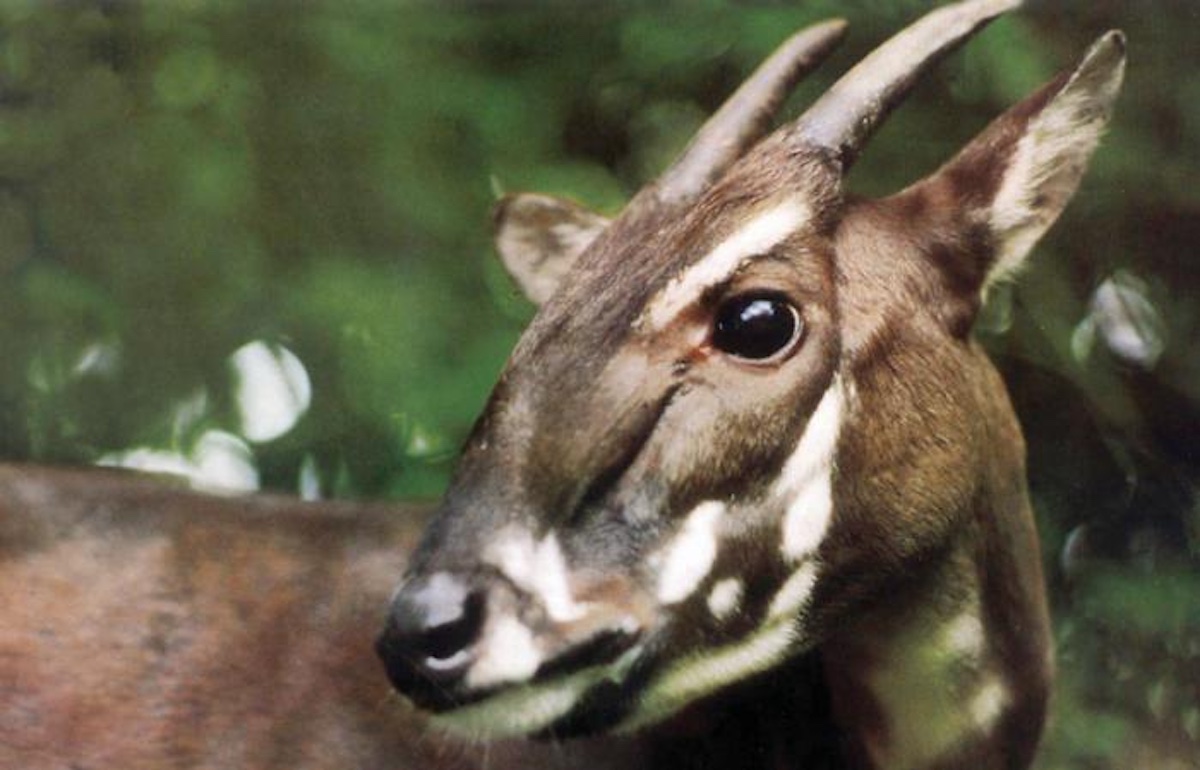
The Saola is not a new discovery in the sense of a fossil; it is one of the most spectacular zoological finds of the 20th century. First discovered in May 1992 by a joint team from the Vietnamese Ministry of Forestry and the World Wildlife Fund (WWF), the Saola was the first large mammal new to science in over 50 years. The team came across a skull with unusual, long, straight horns in a hunter’s home. This was the first clue that a creature from local folklore was, in fact, real.
To see a Saola in the wild is a feat fewer than a handful of scientists have ever accomplished. They are so secretive that they have been nicknamed the “Asian Unicorn.” The latest “spotted again” report does not necessarily mean a scientist took a selfie with one. Instead, it refers to a combination of local sightings, camera trap triggers, and DNA analysis from scat or other biological samples. The last confirmed sighting by a researcher was in 2013 in Vietnam, but continuous signs of life keep the hope alive. The most recent evidence, emerging from protected areas in Laos and Vietnam, confirms that this species has not vanished, defying the pessimistic predictions of its imminent extinction.
A. The Biological Marvel: What Makes the Saola So Unique?
Understanding the Saola begins with its anatomy and behavior. It is not a deer, nor an antelope, though it resembles both. It belongs to the Bovidae family, which includes cattle, goats, and antelopes, but it is so distinct that it forms its own genus: Pseudoryx.
Let’s break down its unique characteristics:
-
The Eponymous Horns: Both male and female Saola possess long, slender, parallel horns that can reach up to 20 inches (50 centimeters) in length. These horns are sharp, slightly backward-curving, and are a deep black or dark brown. The name “Saola” means “spindle horn” in Vietnamese, a direct reference to this feature.
-
Facial Markings: The Saola has a striking appearance. It features distinctive white markings on its face, including a broad white stripe above the eye, similar to a brow, and white patches on the snout and chin. These markings give it a unique, almost masked expression.
-
Size and Build: An adult Saola stands about 31 to 35 inches (80-90 cm) at the shoulder and can measure nearly 5 feet (150 cm) in length. They weigh between 176 and 220 pounds (80-100 kg). Their bodies are robust, with dark brown fur covering the back and a black stripe running down the spine.
-
Glands: Saola possess a highly developed maxillary gland on the face, near the mouth, which is covered by a flap of skin. They also have large inguinal glands between the toes. These glands secrete a musky paste used for scent-marking territorial boundaries a critical behavior in their dense, low-visibility habitat.
-
Diet and Behavior: Unlike many ungulates that form large herds, Saola are solitary or live in small groups of two or three. They are browsers, meaning they feed on leafy material, specifically the leaves of fig trees, shrubs, and other vegetation along riverbanks. They are diurnal, but their extreme shyness makes them incredibly hard to observe.
B. The Geographic Stronghold: The Annamite Mountains
The Saola is an endemic species to a very specific and challenging environment: the Annamite Mountains, a lush, rugged mountain range that runs along the border of Laos and Vietnam. This biodiversity hotspot is also home to other recently discovered and rare species, such as the large-antlered muntjac and the Annamite striped rabbit.
The Saola’s habitat preferences are highly specific. They are rarely found far from water sources. Their ideal home consists of:
-
Evergreen and Deciduous Forests: Dense, multi-layered forests with a thick canopy.
-
Karst Landscapes: Limestone formations with steep gorges and caves, providing natural shelter.
-
Proximity to Streams and Rivers: The majority of local ecological knowledge and camera trap evidence places Saola in lowland valleys near running water, perhaps because their preferred food grows there.
The fragmented nature of these forests is a major problem. Because their habitat is naturally patchy and now increasingly broken by roads and agriculture, Saola populations are isolated, leading to reduced genetic diversity.
C. The Recent “Spotted Again” Evidence: What Does It Mean?
When news headlines declare the “Asian Unicorn” has been spotted again, it is crucial to understand the nature of the evidence. Due to the creature’s extreme rarity, a visual sighting by a human is almost impossible. Instead, the “spottings” come from a triumvirate of evidence:
1. Camera Traps: The gold standard for evidence. In 2013, a camera trap in Vietnam’s Quang Nam province captured an image of a Saola. More recently, between 2019 and 2023, remote cameras set up by conservation NGOs like the Saola Working Group and the Vietnam Forest Protection Department have captured blurry but unmistakable images of the distinct horns and markings. In 2024, a new analysis of camera trap footage from a protected area in Laos confirmed multiple adult individuals moving through a corridor.
2. Local Ecological Knowledge (LEK): Conservationists have realized that listening to local villagers is as important as technology. In the last two years, structured interviews in villages bordering the Pu Mat National Park and the Xe Sap National Protected Area have yielded consistent reports. Villagers describe encountering a strange, silent, forest-dwelling cow with long straight horns. These reports are cross-referenced and validated by rangers.
3. DNA and Scat Analysis: Perhaps the most reliable recent method. In 2022 and 2023, field teams collected fecal samples from the forest floor in the Bolikhamxay Province, Laos. Using PCR (Polymerase Chain Reaction) technology, scientists at the Leibniz Institute for Zoo and Wildlife Research successfully extracted and sequenced Saola DNA, confirming the animal’s presence in an area where it was previously thought extinct. This does not provide a photograph, but it is irrefutable proof of life.
The most recent definitive “re-spotting” (as of early 2025) involves a combination of method B and C in the Eastern Annamites, where rangers found a fresh carcass of a Saola killed by a predator (likely a dhole, or Asian wild dog). The carcass was genetically tested, confirming the species. Furthermore, a series of trail cameras placed on the same path captured a live, healthy adult male two weeks later. This confirms a small, breeding population persists.
D. The Critical Threats: Why Are Saola Dying Out?
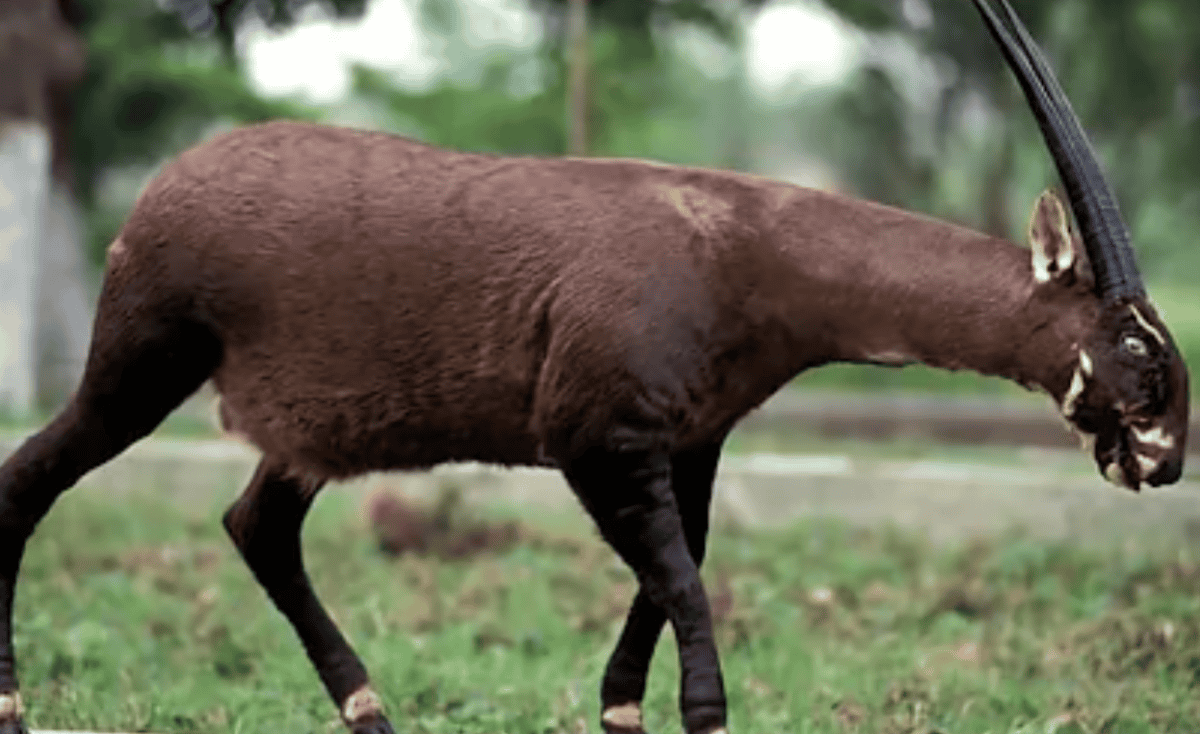
Despite the hope of these new sightings, the Saola’s status is perilous. The IUCN Red List classifies it as Critically Endangered, and some estimates suggest there may be fewer than 100, and possibly as few as 20 to 50, individuals remaining. The threats are not natural; they are almost exclusively anthropogenic.
The primary dangers, listed in order of severity, are:
A. Snaring (The “Silent Extinction”): This is the number one killer. Across Laos and Vietnam, hunters set millions of wire cable snares to catch wild pigs, deer, and civets for the bushmeat trade. These snares are indiscriminate traps. A Saola, walking through the forest, steps into a simple wire loop, which tightens around its leg or neck. The animal cannot escape and dies of strangulation, exhaustion, or starvation within days. There are no hunter-specific traps for Saola; they are accidental victims, but due to their low population, even a single snare death per year is a disaster.
B. Habitat Fragmentation: Logging, both legal and illegal, along with the clearing of land for coffee, rubber, and cardamom plantations, has carved the Saola’s home into tiny, unconnected islands. A species that already has a naturally low density needs large, continuous tracts of forest to find food and mates. Fragmentation leads to inbreeding and reduces the gene pool.
C. Infrastructure Development: The construction of roads and dams through the Annamite Mountains opens previously inaccessible forests to hunters and loggers. The Ho Chi Minh Highway and various hydropower projects have directly destroyed breeding grounds and created highways of destruction.
D. Climate Change: While less immediate than snares, shifting rainfall patterns are altering the growth cycles of the fig and shrub species Saola depend on. Prolonged dry seasons concentrate animals near water, making them easier targets for opportunistic hunting and more vulnerable to snares.
E. Lack of Captive Population: There is not a single Saola in any zoo in the world. Captive breeding programs have failed catastrophically. The few Saola that have been captured in the wild (by well-meaning scientists or villagers) have died within weeks due to stress, dietary issues, and inability to adapt to captivity. This means that in-situ conservation (protecting them in the wild) is the only option. There is no “ark” or backup population.
E. The Comprehensive Conservation Plan: How to Save the Asian Unicorn
The “spotted again” news is not just a celebration; it is a desperate alarm bell. Several high-stakes initiatives are underway to prevent the extinction of the Saola. These strategies are aggressive, innovative, and community-driven.
Here is a structured overview of the current conservation action plan:
A. Operation Snare Removal (Emergency Response)
-
Objective: Remove every single snare from the forest.
-
Method: Deploy highly trained, 24/7 “Snares to Zero” rapid response teams consisting of former hunters and forest rangers. These teams systematically sweep critical zones (like the Saola corridors in Thua Thien Hue province, Vietnam) using metal detectors and GPS mapping. In 2024 alone, a team of 50 rangers removed over 12,000 snares from a 50,000-hectare area.
-
Challenge: Snares are cheap (costing pennies) and are reset frequently. It is a never-ending battle.
B. Community-Based Guardianship (The Village Alliance)
-
Objective: Convert local hunters and farmers into paid forest guardians.
-
Method: The “Saola Village Network” pays local community members a salary to patrol forests, report snare locations, and monitor camera traps. In return, communities receive financial incentives such as schools, clean water systems, and microloans for sustainable farming (e.g., raising silkworms or growing mushrooms instead of hunting).
-
Result: In the Xaychamphone District of Laos, villages that previously set snares have reduced snaring density by 85% within two years by joining this program.
C. Canine Detection Units (Scent Squad)
-
Objective: Use dogs to find Saola scat for DNA analysis.
-
Method: Specialized conservation dogs (often Belgian Malinois or rescue hounds) are trained to ignore other animals like deer or wild pigs and only signal the scent of Pseudoryx nghetinhensis. These dogs can cover 20 miles of forest per day, locating fresh droppings that scientists then use for population mapping.
-
Breakthrough: In 2023, a detection dog named “Luna” found 17 unique Saola scat piles in a two-week period in Laos, confirming the largest continuous population zone known to science.
D. Smart Technology & AI Camera Traps
-
Objective: Get real-time alerts of Saola presence and intruders.
-
Method: New generation AI camera traps do not just take motion photos; they have on-board algorithms to identify a Saola in under 10 seconds. If a Saola is identified, the system sends a ping to a ranger station. If a human with a machete or a snare wire is identified, the system sends an alert for immediate intervention.
-
Status: This system is currently being deployed in the Green Corridor of Vietnam with funding from the Global Environment Facility.
E. Genetic Rescue and Biobanking
-
Objective: Preserve the genetic future even if individuals die.
-
Method: A biobank at the University of Hanoi now stores cryogenically frozen skin cells, sperm, and eggs from the Saola carcass found in 2024. While captive breeding is currently impossible, advanced reproductive technologies like interspecies cloning (using domestic cattle as surrogates) are being researched for a potential future “de-extinction” type intervention, though this is a last resort.
F. The Role of International and Local Organizations
No single government or NGO can save the Saola alone. This is a collaborative battlefield. The key players include:
-
The Saola Working Group (SWG): Part of the IUCN Species Survival Commission, this is the global steering committee for all Saola efforts.
-
WWF (World Wildlife Fund): Provides funding, camera traps, and advocacy. Their “Greater Annamites” initiative is a core program.
-
Vietnam’s Forest Protection Department (FPD): The legal authority on the ground, responsible for arrests and protected area management.
-
Wildlife Conservation Society (WCS): Runs the majority of the snare removal and detection dog programs in Laos.
-
Local communities (Bru-Van Kieu and Lao ethnic groups): The true heroes who have coexisted with the Saola for centuries without driving it extinct.
G. How You Can Help: A Call to Action
You do not need to travel to the Annamite jungles to make a difference. If you care about the Asian Unicorn, here is a practical checklist of actions you can take today:
A. Support Anti-Snaring NGOs directly: Donate to organizations like the Saola Working Group, WCS, or WWF. Specify your donation for “snare removal” or “Saola conservation.”
B. Raise digital awareness: Use social media. Share verified news about the Saola. Use hashtags like #SaveTheSaola, #AsianUnicorn, and #SnareFreeForests. The more people know, the more pressure on governments.
C. Avoid buying exotic woods or bushmeat: The demand for luxury rosewood (from the Annamites) and exotic wild meat funds the illegal logging and hunting economies that set the snares. Check the origin of wood products.
D. Report illegal wildlife trade: If you are traveling in Southeast Asia and see Saola horns or other illegal wildlife products for sale, report it to the local authorities or the ASEAN Wildlife Enforcement Network (ASEAN-WEN).
E. Adopt a virtual ranger: Some conservation programs offer symbolic adoption of a ranger team. A monthly $10 donation can pay for a week’s worth of patrol food and fuel.
Conclusion: The Unicorn Still Walks

The phrase “Saola ‘Asian Unicorn’ Spotted Again” is more than a clickbait headline. It is a testament to resilience of both an animal and the humans fighting for it. The fact that this creature, defying habitat destruction, relentless snaring, and climate instability, still stalks the riverside trails of the Annamite Mountains is a miracle of modern natural history.
However, a miracle is not a strategy. The window for saving the Saola is not closing; it is a crack that is about to seal shut. Each confirmed sighting buys us a little more time, but time is the one resource that is critically endangered. The Saola represents everything that is wild, untamed, and worth saving. It is an ancient spirit of the forest, a living artifact from a time before the Anthropocene. To let it vanish now, after we have spotted it again, would be an unforgivable failure of our generation.
The Asian Unicorn is not a myth. It is breathing, browsing, and hiding in the green shadows. Our job is to ensure that the next headline, ten years from now, does not read “The Last Saola Dies Alone,” but rather, “Saola Population Doubles: The Comeback of the Century.